
Last updated October 16, 2026
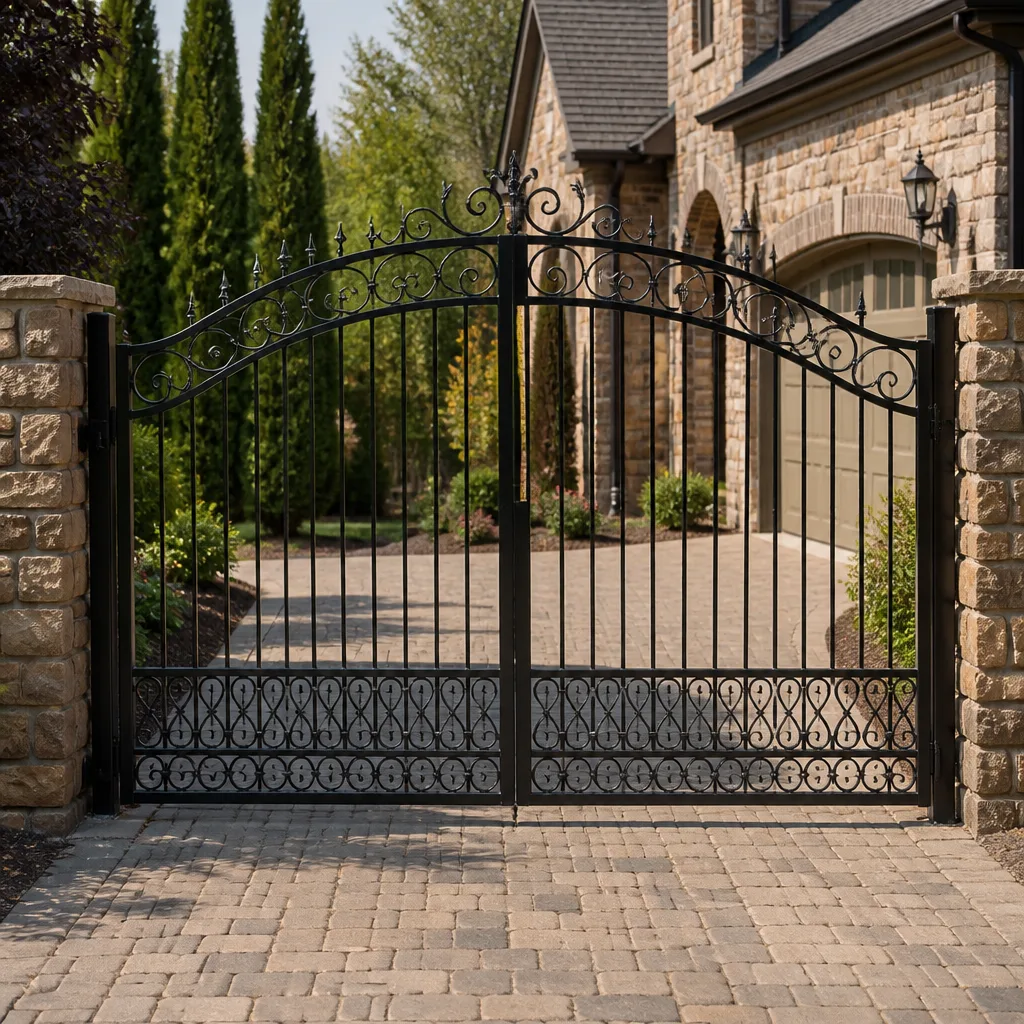 Wrought iron
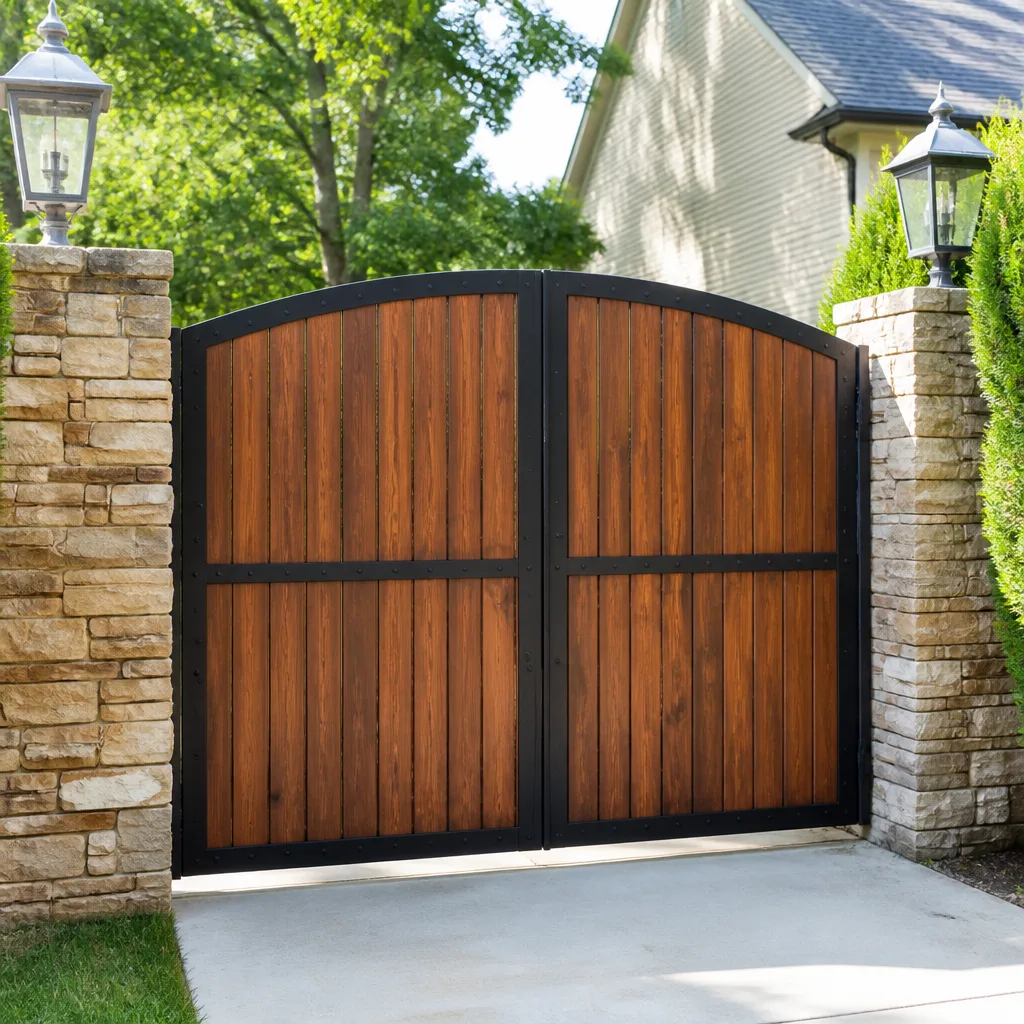 Wood & steel frame
 Farm & ranch
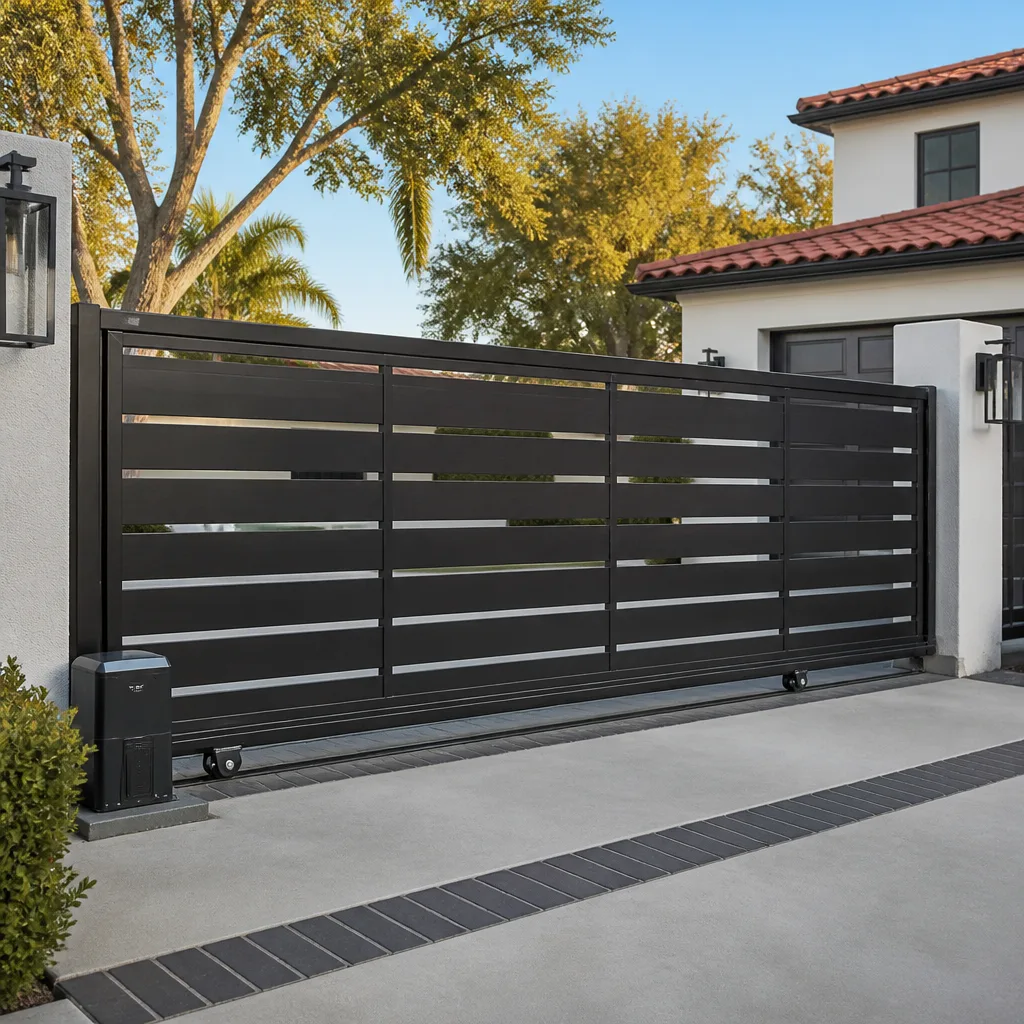 Sliding driveway gates
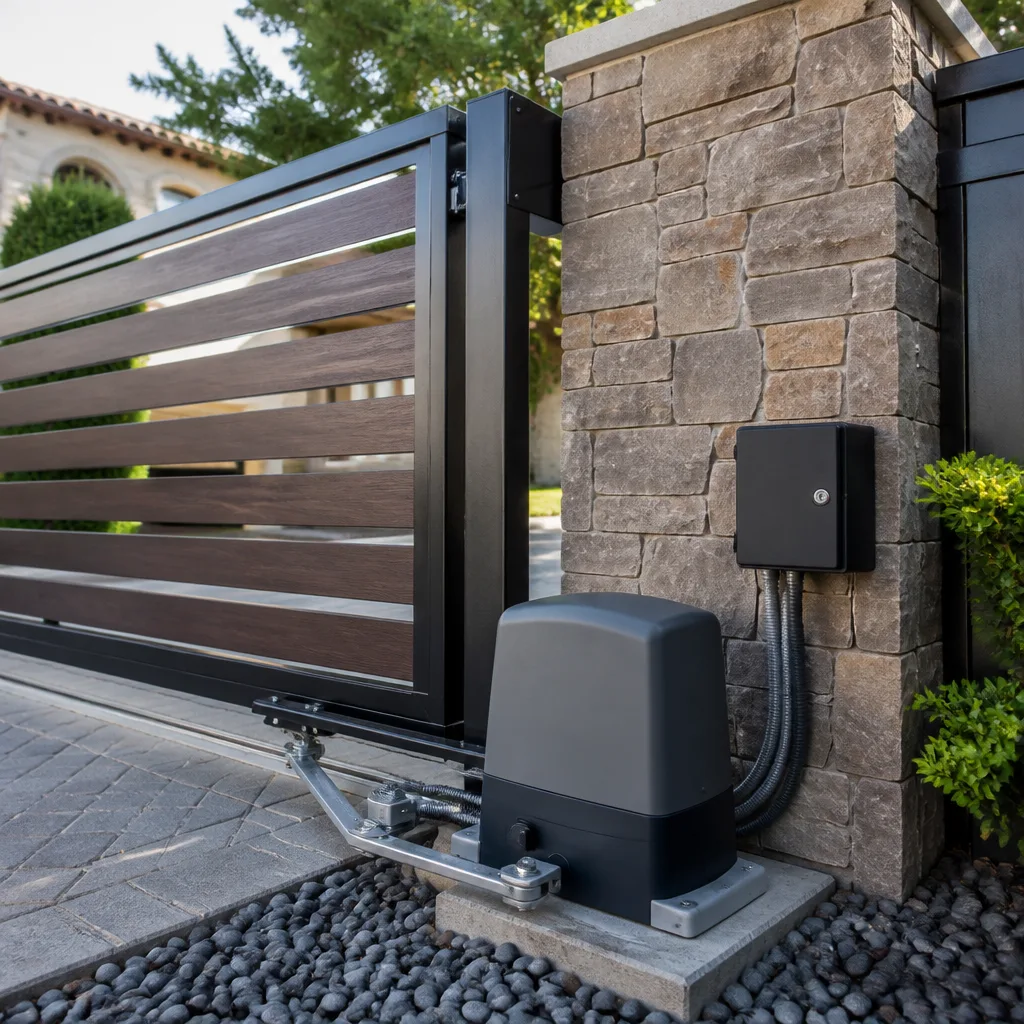 LiftMaster operators
Free on-site gate assessment - hinges, posts, and your LiftMaster or Nice gate operator checked before anything is quoted
The assessment is free and the quote is the invoice.
Get your free estimateSeasonal Gate Repair Care for Thousand Oaks: Year-Round Homeowner’s Guide
The Santa Ana winds that push through Thousand Oaks in fall don’t just blow debris into gate tracks. They carry fine particulate matter that gets into motor housings and photocell lenses, setting up failures that show up three months later when temperatures drop. For more guides & resources, see our more guides & resources; most seasonal gate care guides give you a spring-summer-fall-winter checklist that works fine for Chicago or Denver. It doesn’t work here. This guide maps maintenance to the two actual stress cycles that gate systems in the Conejo Valley face: the hot, dry Santa Ana season and the cool, damp winter months. You’ll learn what to check before winds arrive, what to inspect after they pass, how summer heat shortens control board life, and how to build a repair history that tells you when replacement beats another patch job.
Quick Answer
Seasonal gate care in Thousand Oaks means two focused inspections per year: one in September before Santa Ana winds hit, and one in January after winter moisture sets in. A homeowner can handle track cleaning, lubrication, and visual checks in about 45 minutes per season. Component-level work like torque checks on hinge bolts, motor ventilation assessment, and photocell alignment should be done by a gate technician, with typical service calls in Thousand Oaks running $95 to $175 for inspection and minor adjustments. See The Complete Guide to Gate Repair in Thousand Oaks for a deeper breakdown.
Styles & brands we work with
Table of Contents
- Pre-Santa Ana Season Checklist: September in Thousand Oaks
- Winter Preparation: Moisture, Frost, and Battery Backup
- Post-Wind-Event Inspection: What to Check After a Blow
- Summer Heat and Gate Motors: The Conejo Valley Load
- Building a Seasonal Repair History That Guides Replacement
- Common Mistakes to Avoid
- When to Call a Professional
- Frequently Asked Questions
Pre-Santa Ana Season Checklist: September in Thousand Oaks
By mid-September, the air in Thousand Oaks starts shifting. Humidity drops. Winds pick up. For a gate system, that means fine dust, dry leaves, and small branches are about to be pushed into every track channel, hinge joint, and sensor lens on your property. The time to prepare is before the first big blow, not after.
Start with the track channels. A sliding gate that’s been running clean all summer can start binding within two weeks of the first Santa Ana event because wind-driven debris packs into the bottom rail. Sweep the channel with a stiff brush, then check for any small stones or twigs lodged against the rollers. If you hear a grinding noise when the gate moves, stop using it until the channel is cleared. Running a gate over packed debris scores the rollers and, over time, wears flat spots into them, which means a replacement rather than a cleaning.
- Clear both track channels completely. Use a stiff nylon brush, not metal, to avoid scratching the channel surface. Work from the closed position to the open position so you can see the full travel path. In neighborhoods like Newbury Park and Westlake, we regularly find eucalyptus bark and oak leaves packed into the last six inches of channel, which is exactly where a gate stalls.
- Check hinge bolt torque on swing gates. With a properly sized wrench, turn each hinge bolt gently. If it moves more than a quarter turn without resistance, tighten it to snug, then stop. Over-tightening compresses the hinge bushing and creates a different problem. You’re checking for looseness, not trying to seat the bolt deeper.
- Inspect photocell lenses with a dry microfiber cloth. The safety sensors at the base of your gate post have small plastic lenses that face each other. Santa Ana dust coats them until the beam weakens enough to trip the auto-reverse. Wipe both lenses clean, then check that the indicator light on each sensor is solid. A blinking light means alignment has drifted or the lens is partially blocked.
- Check the limit switch area. The limit switch tells the motor where to stop. Debris near the switch housing can interfere with the trip mechanism on mechanical switches, or block the magnet on magnetic switches. Clear leaves, spider webs, and dust from the area around the switch, but don’t adjust the switch itself unless you know the make and model, and never force it.
- Lubricate the moving metal contact points. Use a light silicone spray, not WD-40 and not white lithium grease. Silicone resists the fine dust that arrives with Santa Ana winds. Oil-based lubricants collect grit and turn into a paste that accelerates wear. Apply to hinge pins, roller bearings, and the chain or belt on opener models that use them. Wipe excess immediately.
- Test the full open and close cycle three times. Watch the gate speed. Listen for hesitation, grinding, or a change in pitch from the motor. A gate that sounds different in September than it did in July is telling you something is starting to fail. Write down what you hear in a simple log, because that note becomes useful later, see the repair history section below.
If any of these steps reveals a component you don’t recognize or a sound you can’t explain, that’s the moment to call a gate technician. We’d rather diagnose a small problem in September than replace a burned motor in December. And if you’re not comfortable on your knees with a flashlight and a brush, our crew does this exact seasonal checklist as a flat-rate inspection. Call Carver Gate Repair Thousand Oaks home at (805) 309-3048 and ask for a pre-wind inspection.
Winter Preparation: Moisture, Frost, and Battery Backup
Thousand Oaks winters are mild compared to most of the country, but they’re not dry. Overnight lows in December and January regularly drop into the low 40s, and morning frost appears on exposed metal surfaces in neighborhoods like Lynn Ranch and Wildwood. That moisture works its way into hinge pins, motor housings, and electrical connections in ways the dry summer months never will.
The most overlooked component in winter is the battery backup system. Many gate operators in Thousand Oaks, especially DoorKing and LiftMaster models, run on AC power with a 12-volt backup battery that keeps the gate operational during a blackout. Cold weather reduces battery efficiency by 20 to 30 percent, and a battery that’s been sitting since installation two or three years ago often fails on the first cold morning when it’s actually needed. If your gate has a battery backup, check it in December: disconnect AC power at the breaker and run the gate on battery alone. If the gate moves slower than normal or stops mid-travel, the battery is due for replacement. A new backup battery typically runs $40 to $90 in Thousand Oaks, installed.
Lubrication needs change in winter too. The silicone spray that works well in fall can feel sticky below 45 degrees on some hinge metallurgy. If your swing gate groans on cold mornings, wait until the day warms above 55 degrees, then reapply a very light coat of silicone to the hinge pins. Don’t add more lubricant on top of old lubricant. Wipe the pin with a clean rag first, then apply one short spray, then wipe the excess. That’s the whole job. Over-lubrication in winter is more common as a problem than under-lubrication, because cold metal holds surface oil longer and collects more moisture.
Check the weep holes and drain paths on the motor housing. Most residential gate operators in Thousand Oaks have small drain holes at the base of the housing to let condensation escape. If those holes are blocked by spider webs, dust, or paint, moisture collects inside the housing and accelerates corrosion on the control board. Use a bent paper clip or a toothpick to clear each hole gently. Don’t enlarge them and don’t drill new ones.
Finally, walk the gate track after any rain. Thousand Oaks soil, especially in areas with heavy clay, swells when wet. A gate that ran smoothly in October can bind in January because the ground shifted and the track moved out of level. Look for water pooling along the track line. Standing water under a gate operator is a signal that drainage has changed, and that’s a call worth making before the operator shorts.
Post-Wind-Event Inspection: What to Check After a Blow
A significant Santa Ana event, the kind that takes down tree limbs and sends trash cans into the street, leaves specific damage on gate systems. The gate may still open and close, and that’s the problem. Homeowners assume no visible break means no damage, while the real damage is accumulating inside the motor and at the sensor mounts.
Here’s the protocol our technicians follow after any wind event strong enough to rattle fences in Thousand Oaks:
- Clear the track fully before the next operation. Even if the gate still runs, push it manually (with the operator disengaged) for the full length of travel before restoring power. You want to feel the resistance. If the gate catches or stutters, there’s debris in the channel or a roller bearing damaged. Forcing the gate through it under motor power strips the gear teeth on the operator, converting a $75 roller replacement into a $600 motor gear rebuild.
- Check photocell alignment. Wind pushes fence posts and gate frames just enough to knock the two sensor heads out of alignment. On most Ghost Controls and Mighty Mule models, the receiving sensor has an indicator light that blinks when the beam is weak or broken. If both lights are solid, alignment is intact. If the gate reverses for no reason when closing, the sensors are misaligned or obstructed.
- Inspect the articulating arm on swing gate operators. The arm transfers motor force to the gate leaf. High winds push back against the gate while the arm is mid-stroke, which stresses the clevis pins and the bolt that secures the arm to the gate. Look for play. Grab the arm mid-length and try to move it up and down. Any movement beyond a fraction of an inch means the pin has worn or the mount has loosened.
- Check the chain or belt tension on sliding gates. Wind pushing a sliding gate sideways loads the chain asymmetrically. A chain that was properly tensioned in August can be loose after a big blow. You’re looking for more than about half an inch of deflection when you press down on the middle of the chain. If it’s hanging, don’t run the gate. The chain can jump the sprocket and drive the gate off its end stop.
- Open the motor housing and look for fine dust infiltration. Not every housing seals perfectly. Santa Ana dust is fine enough to get past the gasket on older operators. When we open a housing after a wind season in Thousand Oaks, we often find a quarter inch of fine gray powder settled on the control board. That dust holds moisture, and moisture plus a circuit board equals a short. Blow it out with compressed air if you have it, or wipe gently with a dry paintbrush. Don’t use a vacuum, which generates static that can damage the board.
- Test the auto-reverse function. Place a 2×4 block in the gate’s closing path. The gate should stop and reverse before crushing the block. If it doesn’t, the safety system has failed, and the gate should be left open and unplugged until repaired. This is the single most important post-wind test, because wind damage to sensors or the control board’s safety logic doesn’t always produce a visible symptom.
If these steps sound like more than you want to take on, that’s predictable. This is trade work. A Gate Repair in Thousand Oaks technician can run through the full post-wind protocol in under an hour. The price is quoted before we start, and it doesn’t change at the door.
Summer Heat and Gate Motors: The Conejo Valley Load
Summer in Thousand Oaks means weeks of daytime highs in the low to mid-90s. Your gate motor, especially a swing arm model mounted on a dark metal post in direct sun, can reach internal operating temperatures 30 to 40 degrees above ambient. Most residential gate operators are rated for continuous duty up to about 140 degrees internal temperature. The math is not in your favor in August.
The component that fails first in sustained heat is the control board. Capacitors dry out. Solder joints flex with thermal expansion and contraction, and after enough cycles, micro-fractures form. We see the spike every year: when Thousand Oaks gets its first multi-day heat wave in late June or early July, the calls for “my gate just stopped” jump. The board didn’t fail that day. It failed gradually over three previous summers of heat loading, and the hot day pushed it over the edge.
What homeowners can actually do about this:
- Assess ventilation around the motor housing. Many gate operators sit behind a small access panel in a metal post or a stucco pillar. That confined space acts like an oven. If the housing feels hot to the touch at 2 p.m., the motor inside is running hotter than it should. You can improve ventilation by ensuring the manufacturer’s ventilation slots are not painted over or blocked by landscaping. Don’t seal the housing to keep out dust. That trades a slow dust problem for a fast heat problem.
- Provide shade without enclosing the housing. An awning or a small shade structure that keeps direct afternoon sun off the motor housing can reduce internal temperatures by 15 to 20 degrees, and that can double the life of a control board. What you don’t want is to wrap the housing in a reflective cover. That reflects some heat but traps the motor’s own waste heat inside. Uncovered shade, not insulation, is the goal.
- Adjust the duty cycle if the gate is used heavily. The thermal limit on most residential gate operators is based on a duty cycle, typically around 20 percent, meaning the motor can run about 2 minutes out of every 10. A gate that’s opening and closing 40 times a day in summer heat is running hotter than the cooling capacity of the housing. If your household runs the gate more than about 30 cycles per day in summer, a tech can check whether the cooling airflow is adequate or whether a larger operator is warranted.
- Check the capacitor on older DoorKing and Linear models. These operators use a start capacitor that degrades faster in heat. A swollen or leaking capacitor is a fall-coming symptom. If you’re comfortable opening the housing (breaker off first), look at the capacitor. If it’s bulging at the ends or has a dark stain, it’s done. Replacing it before it bursts costs around $120 to $180 in Thousand Oaks. Replacing the control board after it bursts costs $350 to $500.
The summer months are also when we run most Gate Motor Repair in Thousand Oaks calls. Heat doesn’t cause motor failure directly. It accelerates whatever weakness was already there. The three summers before a failure are when maintenance would have caught it.
Building a Seasonal Repair History That Guides Replacement
Every gate system eventually reaches the point where repair no longer makes financial sense. The question is how you know when. The answer is a repair history, and most homeowners don’t have one. They have a stack of invoices no one ever reviews. A functional history is different. It’s one page, updated seasonally, that tracks the same five data points every time.
The five fields that matter:
- Date of service and technician name. Knowing who did what and when establishes a pattern.
- Component touched and action taken. “Limit switch adjusted” vs. “limit switch replaced” are very different entries.
- Cost of the repair. Parts and labor separated if possible.
- Age of the operator at the time of repair. This ties repairs to the lifespan curve of the equipment.
- Any note on how long the repair held. If the same limit switch gets adjusted every 14 months, that’s a pattern. The part isn’t holding, and the next repair should be a replacement of the switch, not another adjustment.
The replacement threshold on most residential gate operators in Thousand Oaks looks like this: when the annual repair cost for a given system exceeds 50 percent of the cost to replace the operator and its main components, replacement is the better financial move. That’s a rule of thumb, not a formula. What tips it: a control board replacement on a 12-year-old DoorKing or Elite operator, as those boards run $350 to $500 installed, and the operator may be near the end of its service life anyway. The next failure might be the motor itself, another $600 to $800.
Seasonal inspections are where the repair history gets built. Each September and January entry gives you a data point. After three or four years, you have enough data to see the trend line. That’s when you can make a decision based on evidence instead of a single expensive invoice. If you don’t want to keep the log yourself, a gate repair company that stands behind its work with a written service history can do it for you. When our technicians leave a Thousand Oaks home, the written record of what was done goes with the customer. That’s part of Gate Installation in Thousand Oaks service and every repair, because the history is what makes the next decision informed.
Common Mistakes to Avoid
- Using WD-40 on gate hinges and rollers. WD-40 and similar products are solvents that strip existing lubricant, then evaporate and leave the metal dry. The temporary squeak relief masks the problem. Use silicone spray only, applied on dry metal after the old lubricant is wiped off.
- Ignoring a slower-than-normal gate. A gate that’s lost 15 percent of its travel speed in the last month is telling you something is tightening, dragging, or losing power. Homeowners in Thousand Oaks often wait until the gate stops completely, and by then a minor adjustment has become a component replacement. If the speed changes, that’s the early warning. Treat it that way.
- Painting over the motor housing ventilation slots. A fresh coat of paint on the metal post where the operator lives makes the property look better right up until the motor overheats. The manufacturer put those slots there for a reason. Tape them off or replace the housing if you don’t like the look, but don’t seal them.
- Power-washing the gate and photocells. High-pressure water drives moisture into bearing seals, electrical connections, and the motor housing. A gate that gets power-washed in spring often fails the following winter when the trapped moisture corrodes something internal. Hand-wash with a bucket and mild soap, and keep the spray away from sensors and the motor housing.
- Testing the auto-reverse system with a person or pet in the path. Never use a body part to test a safety system. Use a 2×4 block or a cardboard box. If the gate fails the test, the gate should be disconnected until repaired. Auto-reverse failure does not give second chances.
- Skipping the December battery check. The backup battery only proves itself during a power outage, which in Thousand Oaks is most likely during wind events and the rainy season. By the time you discover the battery is dead, you’re already without a working gate. The test takes five minutes and a trip to the breaker box.
When to Call a Professional
Some gate work is genuinely do-it-yourself maintenance: cleaning tracks, wiping lenses, clearing drain holes, and applying silicone lubricant. Other work is best handled by a technician who does this every day. Call when the gate hesitates or changes speed. Call when the auto-reverse test fails for any reason. Call when you hear grinding, when the motor hums but the gate doesn’t move, or when the operator has been underwater. Call when the control board shows visible scorching or the capacitor looks swollen. Call when you’re not sure what you’re looking at inside the motor housing with the breaker off. Our Gate Repair services include free estimates in Thousand Oaks. Call (805) 309-3048, talk to a live person, and get a written price before any work starts. We answer the phone around the clock, because a gate that won’t close at 2 a.m. is a security problem, not a maintenance task for tomorrow.
Frequently Asked Questions
Twice a year is sufficient for most residential gates in Thousand Oaks: once in September before Santa Ana winds arrive, and once in January after winter moisture has been working on the components for a couple of months. The September service focuses on clearing debris and checking hinge and roller tightness before wind season. The January service focuses on moisture, battery condition, and any corrosion that appeared during the cold months. A gate that runs more than 30 cycles per day or sits within 50 feet of the ocean may need a third check in July specifically for heat effects.
Expect to pay $95 to $175 for a seasonal inspection with minor adjustments in Thousand Oaks. That range covers track clearing, lubrication, sensor cleaning, hinge bolt check, and a full function test. If the inspection finds a failing component, like a worn roller or a swollen capacitor, the repair cost is separate and quoted before any work starts. A backup battery replacement runs $40 to $90 installed. A control board replacement runs $350 to $500. These are the numbers we quote in Thousand Oaks, and the quote doesn’t change once we’re on site.
Two things. First, wind pushes against the gate while the motor is trying to move it, which loads the gears, chain, and arm beyond normal operation. That’s how gears strip and arms bend. Second, and less visible, the wind carries extremely fine dust into the motor housing and onto the control board. That dust holds moisture through the winter, and the combination creates a conductive film on the board that eventually causes a short. Neither damage shows up immediately. It accumulates.
The cleaning, wiping, lubricating, and visual checking, yes. The torque checks, sensor alignment, electrical inspection, and battery testing are better left to a technician, especially on any gate larger than a single-car driveway opening. High-tension springs and cables on counterweight gates should never be touched by a homeowner. If you’re not sure which parts of your gate are under tension, that’s the thing to ask a professional before you start.
The gate slows noticeably on hot afternoons. The motor housing is too hot to keep your hand on for more than five seconds. The gate starts and stops erratically, or the auto-reverse trips without anything in the path, which can indicate the thermal sensor inside the operator is reading too high. If you see any of these, stop running the gate and let it cool, then have a technician check the ventilation and the duty cycle. Continuing to run an overheating motor shortens its life significantly.
Eight to twelve years is the typical range for a residential gate operator in the Thousand Oaks climate, assuming regular maintenance and no water intrusion. Operators exposed to direct afternoon sun, running more than 30 cycles per day, or installed without proper drainage may fail in five to seven years. Elite and DoorKing operators in shaded, well-ventilated installations with a maintenance record sometimes go fifteen years. The repair history you keep is the best tool for deciding when your particular motor has reached the end of its economic life. Call (805) 309-3048 if you want an honest assessment of whether to repair or replace, based on the actual wear on your system rather than a sales pitch.
The Bottom Line
Thousand Oaks doesn’t have four seasons, but it has two clear stress cycles on gate equipment, and each one attacks different components. September is for clearing debris, tightening what’s loose, and cleaning sensors before Santa Ana winds arrive. January is for checking batteries, clearing drains, and dealing with what the moisture did. Summer heat is a slow accumulation that shortens the life of control boards and capacitors. The specific work is simple, and the schedule is manageable. What makes the difference between a five-year gate motor and a twelve-year gate motor is whether anyone actually does the maintenance before the symptom appears. If you’d rather have a record of this work than remember it yourself, call (805) 309-3048 and we’ll handle it, on schedule, with a written price and a written guarantee.
Written by Lonnie Burke, Owner at Carver Gate Repair Thousand Oaks, serving Thousand Oaks since 2008.
See the difference
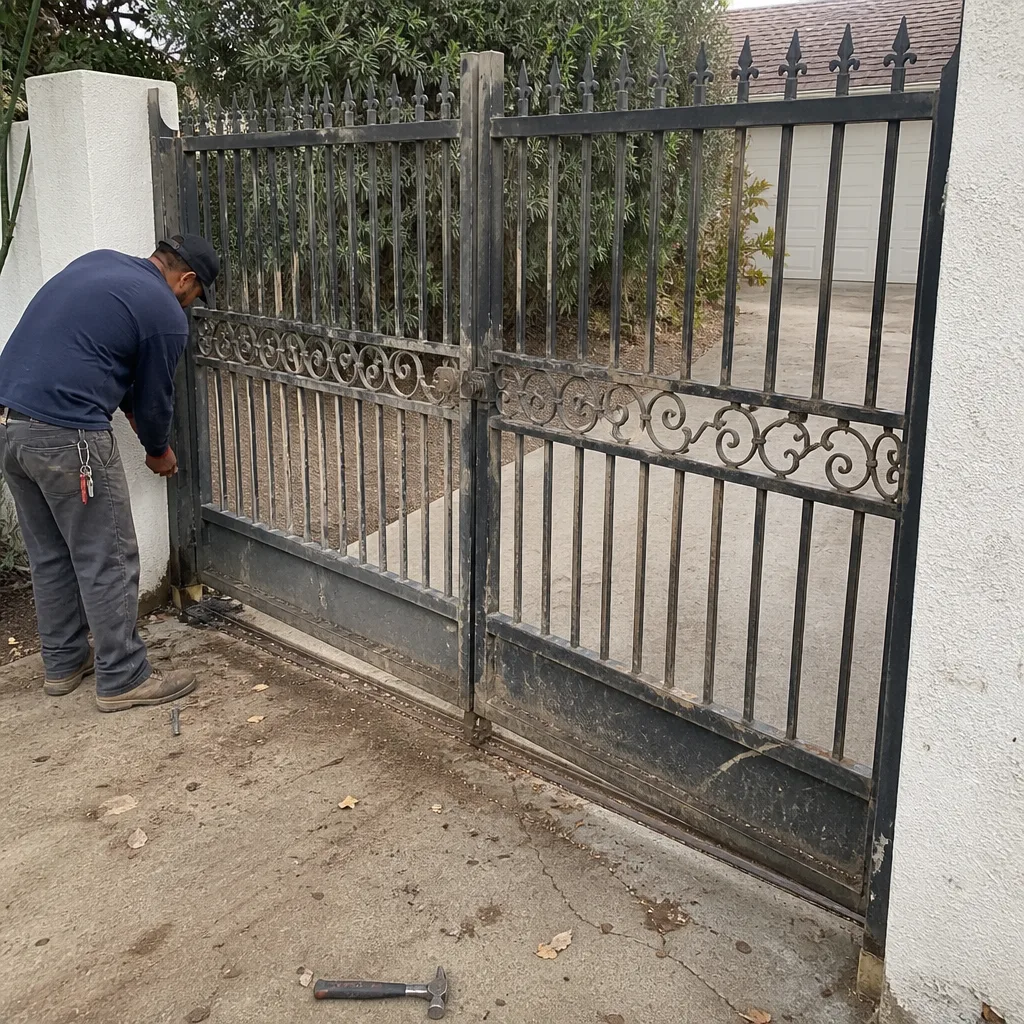 Before
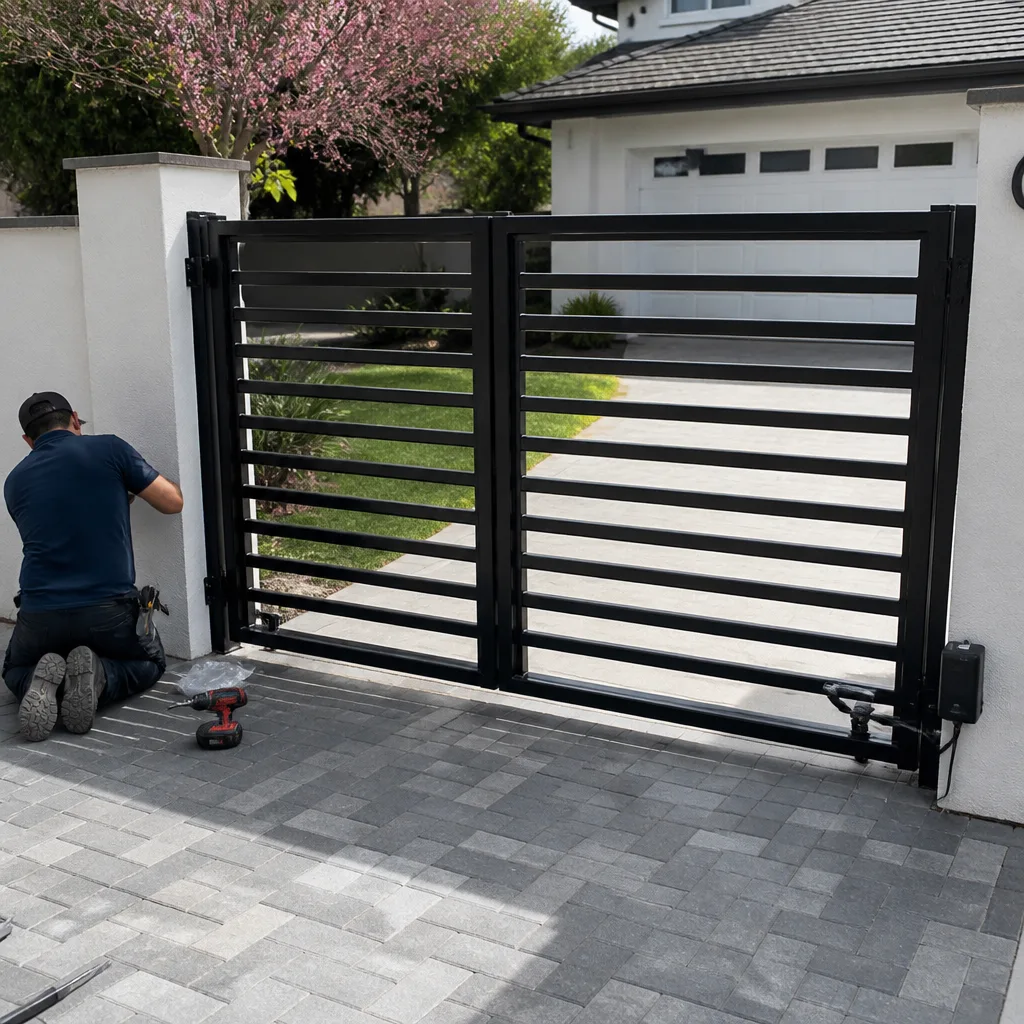 After
After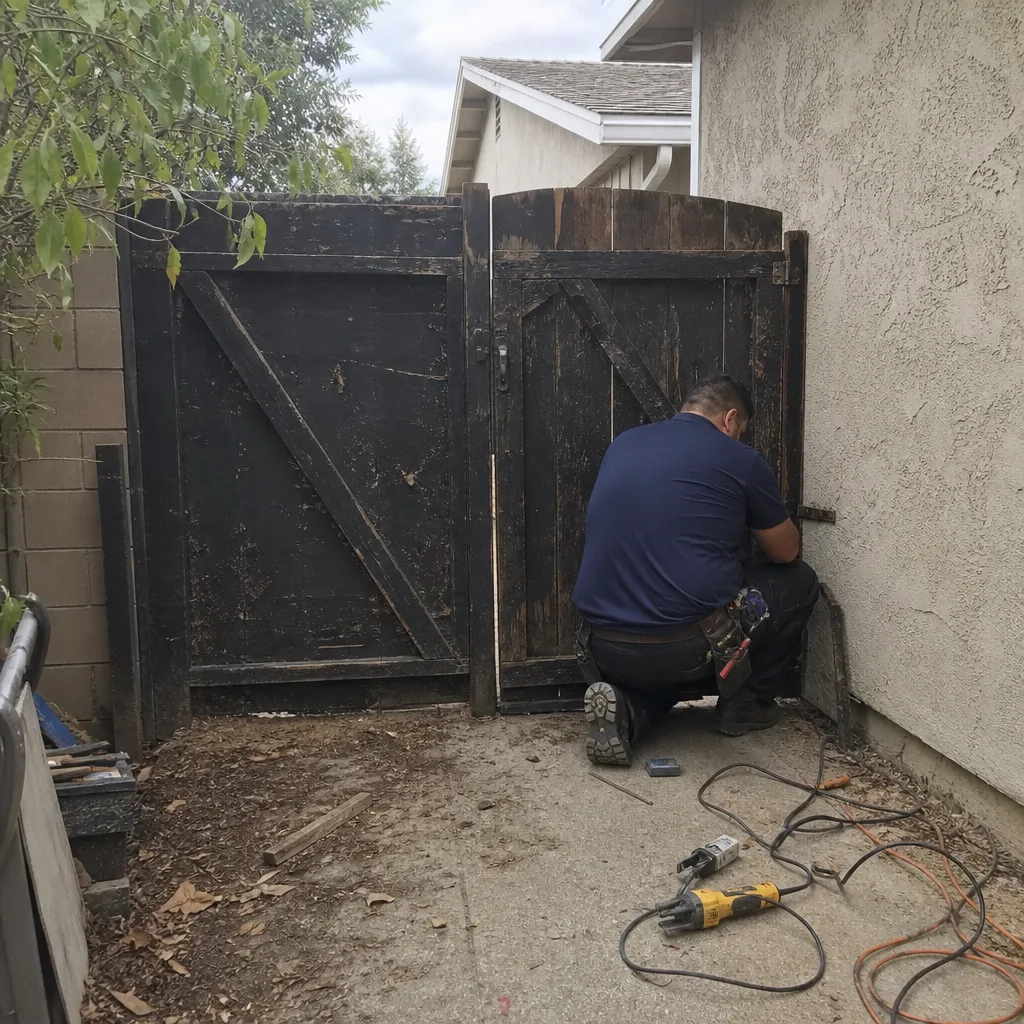 Before
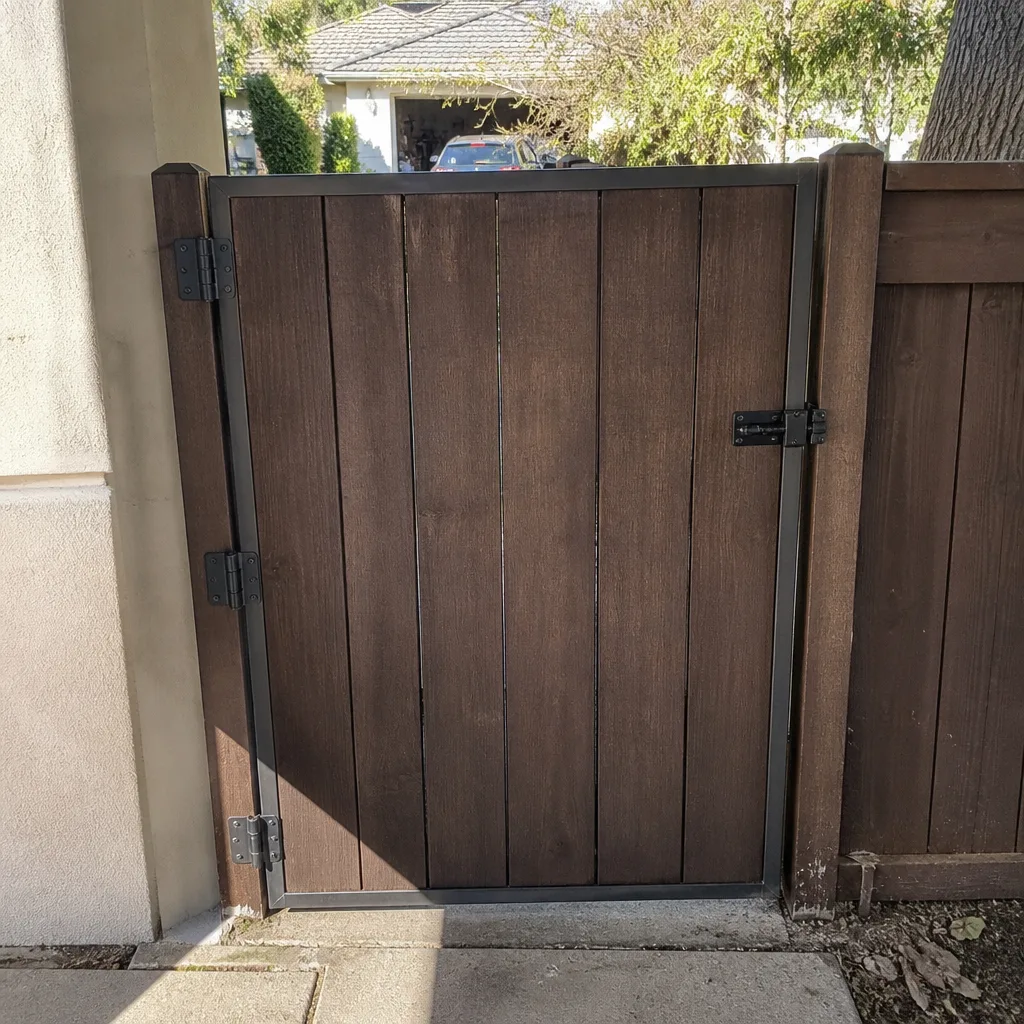 After
After