
Last updated October 16, 2026
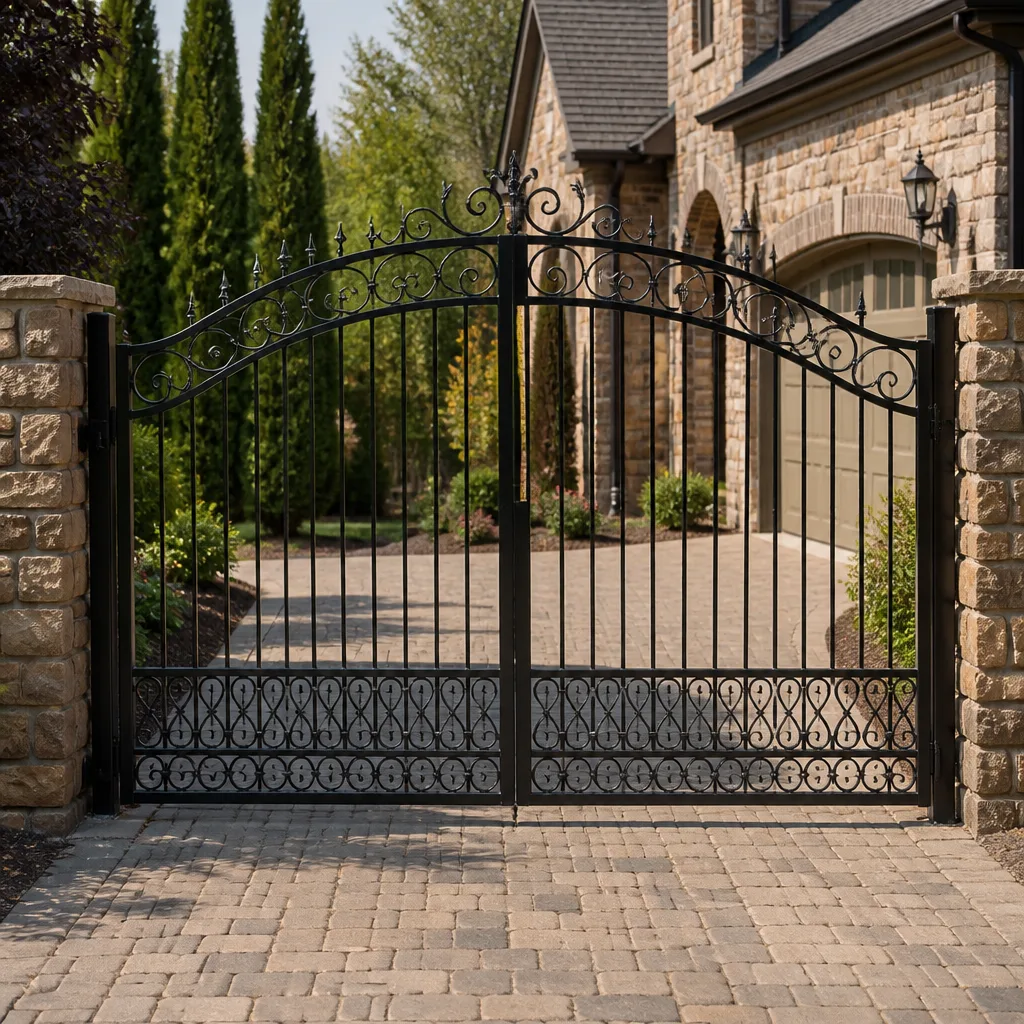 Wrought iron
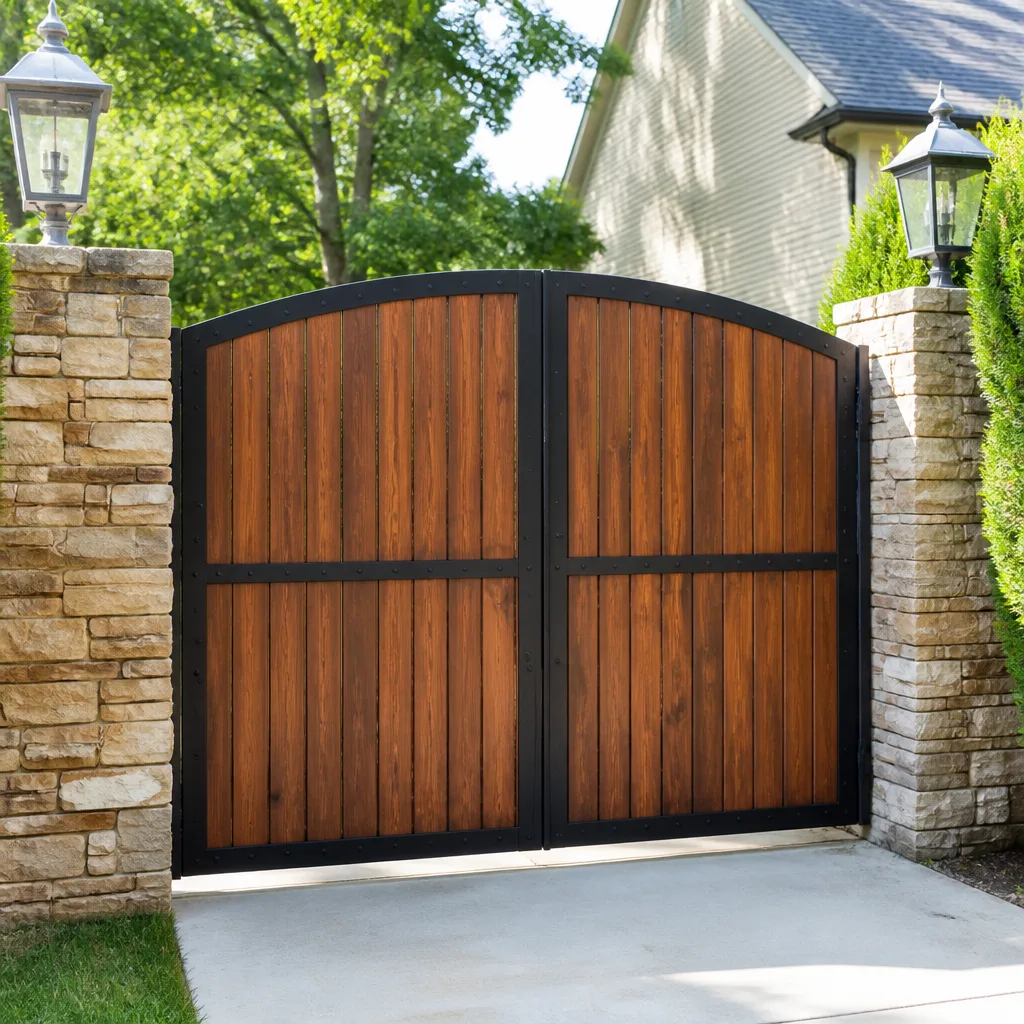 Wood & steel frame
 Farm & ranch
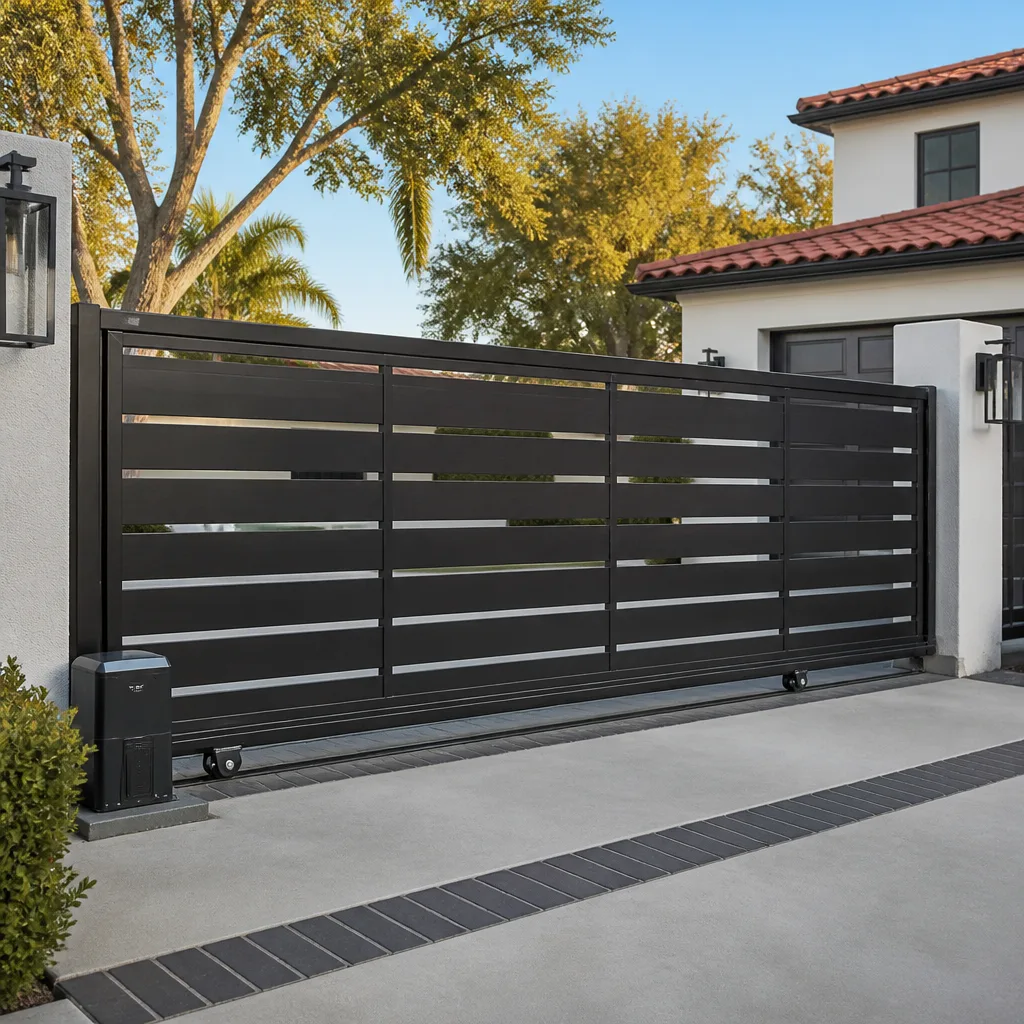 Sliding driveway gates
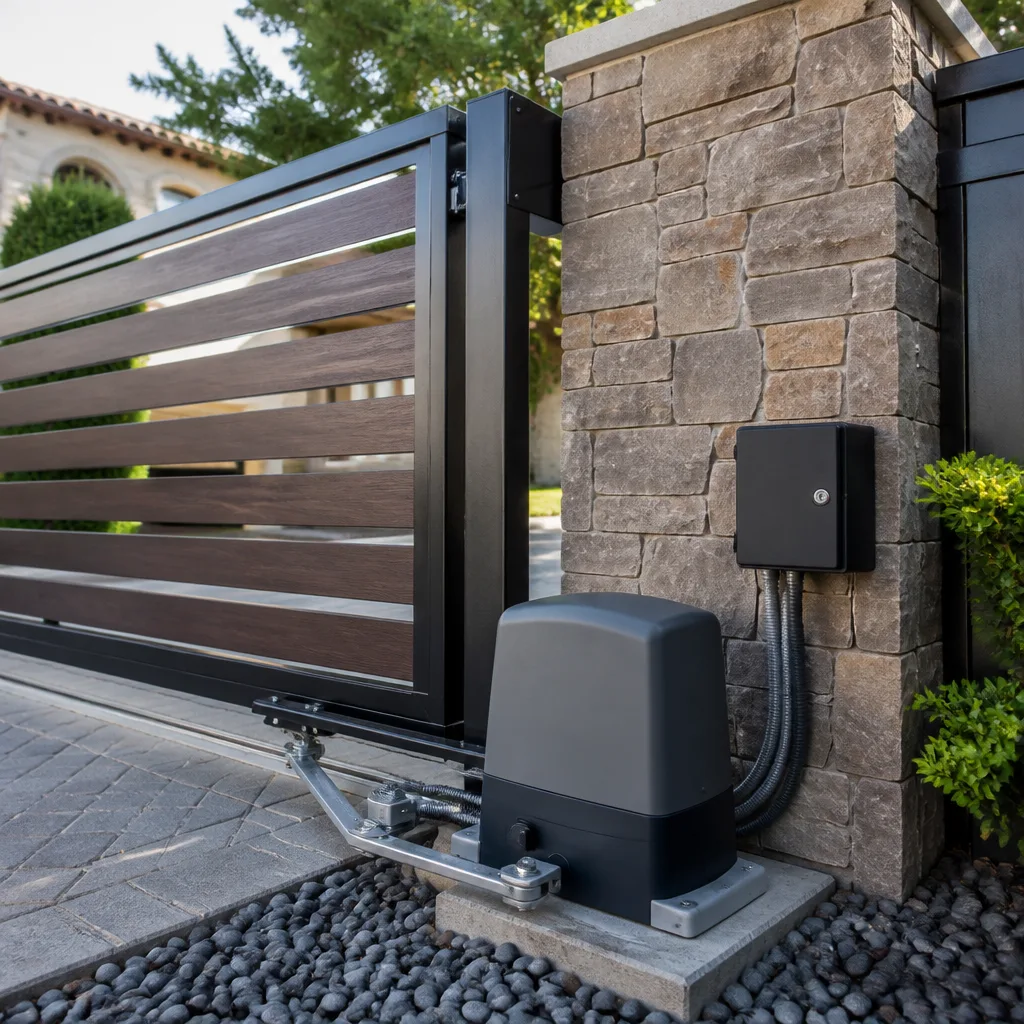 LiftMaster operators
Free on-site gate assessment - hinges, posts, and your LiftMaster or Nice gate operator checked before anything is quoted
The assessment is free and the quote is the invoice.
Get your free estimateDIY vs Professional Gate Repair: The Thousand Oaks Homeowner’s Decision Guide
Every few months, a homeowner in Thousand Oaks calls us after a DIY gate repair has gone sideways. The pattern is almost always the same: what looked like a simple fix on YouTube turned out to involve a safety circuit, a proprietary motor control board, or a structural weld that failed two weeks later. The bill to undo the damage usually runs two to three times what the original repair would have cost. This guide-along with our Gate Repair Maintenance Checklist for Thousand Oaks Homeowners-draws a clear line between the tasks a homeowner can safely handle and the jobs that carry real legal, safety, and financial consequences when done wrong. You’ll learn exactly which repairs fall on each side of that line, what DIY actually saves after you account for tools and mistakes, and how Thousand Oaks climate and code factor into the decision.
Styles & brands we work with
Quick Answer
DIY gate repair in Thousand Oaks makes sense for routine maintenance: lubricating hinges, tightening visible bolts, clearing debris from the track, and checking battery voltages in swing gate operators. It does not make sense for any work involving automatic gate motor calibration, electrical connections, structural post repair, or safety sensor adjustment. Those jobs involve UL 325 compliance, California liability exposure, and warranty implications that a homeowner cannot absorb. The right question to ask is not “Can I do this?” but “What happens if I get it wrong?”
Table of Contents
- The Real Line: What DIY Actually Means on a Gate
- Homeowner-Safe Tasks: The Four Jobs You Can Do This Weekend
- Professional-Only Tasks: Where the Line Gets Hard
- UL 325, California Code, and Your Insurance: The Stakes No One Talks About
- Brand-Specific Diagnostics: What Homeowners Can and Cannot Read
- The Honest Cost Comparison: What DIY Really Saves in Thousand Oaks
- The One Scenario Where DIY Always Makes Sense
- The One Scenario Where DIY Never Makes Sense
- Common Mistakes to Avoid
- When to Call a Professional
- Frequently Asked Questions
- The Bottom Line
The Real Line: What DIY Actually Means on a Gate
The DIY-versus-pro decision on gate repair is not about how handy you are. We’ve met retired aerospace engineers who could rebuild a transmission but should not touch a gate operator’s obstruction sensitivity setting. The line is drawn by three things: safety compliance, liability, and the cost of correcting a mistake. A gate that swings or slides across your driveway is a moving vehicle. An automatic gate in California is regulated equipment. When a homeowner adjusts a motor setting without understanding the safety circuit behind it, the gate may work fine right up until it doesn’t. The injury rate from automatic gates is low because the standards work. Those standards only work when a trained technician sets the parameters.
In Thousand Oaks, the gate you’re working on is likely one of three types: a sliding gate on a track, a swing gate on hinge posts, or a swing gate with an articulating arm operator. Each type has different failure modes and different DIY risk profiles. A sliding gate that jumps its track is usually a debris problem you can fix with a broom and a few minutes. A swing gate that sags is a post problem, and post problems are structural. The distinction matters more than brand, more than age, and more than what the previous homeowner told you about “just needing a little adjustment.”
If you’re dealing with a broken gate and need a professional assessment, our Gate Repair in Thousand Oaks page walks through what a typical repair visit covers.
Homeowner-Safe Tasks: The Four Jobs You Can Do This Weekend
There are exactly four categories of gate maintenance a homeowner can handle without creating liability for themselves or their insurance company. These tasks are mechanical, visual, or low-voltage in nature. They do not involve changing how the gate operates.
1. Lubrication
Gate hinges, rollers, and chains need lubrication roughly every six months in Thousand Oaks. The dry heat and Santa Ana winds mean dust settles into pivot points faster than it does in coastal cities. Use a white lithium grease on metal-to-metal contacts like hinge pins and roller bearings. Use a silicone spray on plastic guides and nylon rollers. Do not use WD-40 as a substitute for grease on load-bearing parts; it’s a solvent and it will strip the existing lubrication away. This is a legitimate weekend task and it will extend the life of your gate hardware.
2. Visual Inspection
Walk the gate’s full path once a month and look at the hardware. Check for rust on weld points, cracks in the track, loose bolts on the operator bracket, and wear on the chain or belt. On swing gates, look at the hinge posts. If you see daylight between the post and the gate leaf, or if the gate has dropped so it catches on the driveway, write down the measurement and call a professional. You are not going to fix a sagging post with a wrench. But you can catch it early, and early catches are cheaper.
3. Battery Checks
Many swing gate operators in Thousand Oaks run on DC power with a backup battery. A homeowner can check the battery voltage with a multimeter if they know where the terminals are. A healthy 12-volt battery reads between 12.4 and 12.7 volts at rest. If it reads under 11.8 volts, the battery is dead or dying. Replacing a battery is also a homeowner-safe task on most Viking and Ghost Controls swing operators, provided the system is powered down first. Read the manufacturer’s voltage requirements in the manual before you buy a replacement.
4. Debris Clearing
Sliding gates fail in Thousand Oaks for one reason more than any other: the track fills with decomposed granite, oak leaves, and dirt from the yard. If your slide gate hesitates, stutters, or reverses, clean the track before you call anyone. This is a broom, a scraper, and fifteen minutes of work. It fixes a surprising percentage of gate issues that homeowners assume are motor failures.
These four tasks represent the complete list of what we consider safe DIY gate work. If your repair is not on this list, read the next section carefully.
Professional-Only Tasks: Where the Line Gets Hard
The line between DIY and professional gate repair is crossed the moment a task involves the motor’s safety logic, the electrical supply, or the structural integrity of the posts. Here is what falls on the professional side and why.
Motor Calibration and Limit Adjustments
Automatic gate operators use limit switches or magnetic sensors to tell the motor when to stop. The limit setting on a slide gate determines exactly where the gate stops in the fully open and fully closed positions. The limit setting on a swing gate determines how far the gate leaf travels. When a homeowner adjusts these to “fix” a gate that’s stopping short, they are usually masking a mechanical issue. The gate may appear fixed for two weeks, then the motor burns out because it’s fighting against a misaligned bracket or a failing roller. Improper limit settings also create a gap at the gate’s closed position that can injure someone trying to pass through. This is not a setting to guess at.
Obstruction Sensitivity
The obstruction sensitivity setting is the single adjustment that keeps an automatic gate from crushing a person, pet, or vehicle. UL 325 requires that gate operators have an inherent entrapment protection system: either a reversing mechanism that detects resistance and reverses direction, or external sensors. When a homeowner adjusts this setting because the gate “keeps reversing for no reason,” they are increasing the force the gate applies before it stops. A gate that applies too much force before reversing can seriously injure a child. The setting defaults from the factory are conservative for a reason. Calibrating obstruction sensitivity correctly requires understanding the gate’s weight, travel speed, and specific motor’s force curve. That is professional work.
Electrical Connections and Wiring
Gate operators are connected to line voltage (120V or 240V) through a disconnect box, and to low-voltage control wiring for safety edges, photo eyes, and keypads. Any work on the line voltage side is electrical work and requires a licensed electrician or a gate technician working under an electrical permit in California. Any work on the control side, even low voltage, is still covered by building codes that reference UL 325 requirements for gate operator installation. A loose wire nut behind a control board can cause intermittent failures that are maddening to diagnose and dangerous in operation.
Structural Post Work
A sagging gate is almost always a post problem. In Thousand Oaks, where soil is a mix of expansive clay and rocky fill depending on the neighborhood, posts can shift over years of hot, dry summers and wet winters. A gate post that has moved out of plumb has to be cut out, the footing re-poured, and the post reset. This involves concrete work, a level, and usually a permit for the footing. It’s not a job you fix with a come-along and a longer lag bolt. If the post moves, the gate moves. If the gate moves, the motor strains. A strained motor fails early.
For replacement or new construction work, see our Gate Installation in Thousand Oaks page for what a proper install includes.
UL 325, California Code, and Your Insurance: The Stakes No One Talks About
Here is the part most DIY guides skip. Automatic gate operators in California are regulated by UL 325, the Standard for Safety for Door, Drapery, Gate, Louver, and Window Operators and Systems. This is not an optional certification. It is incorporated by reference into California building code, which means a gate operator installation is a code-governed installation. If you modify the operator’s safety settings, you have modified a code-governed system. You now own the compliance of that system.
What does that actually mean in Thousand Oaks? It means three concrete things.
- Liability shifts to you. If someone is injured by a gate you modified, the investigation will look at whether the gate was compliant with UL 325 at the time of the injury. If your adjustment changed the entrapment protection or disabled a safety device, the liability likely falls on you. The gate manufacturer’s liability ended when the unit was modified outside their specs.
- Your homeowner’s insurance may not cover you. Standard homeowner’s policies in California cover accidental property damage and personal liability. But many policies include exclusions for work performed by the homeowner that requires a license or permit. Gate operator wiring and calibration falls into this category in many policy documents. Before you open a gate motor, call your agent and ask one question: “If someone is injured by my automatic gate after I’ve adjusted the operator myself, am I covered?” Get the answer in writing or on a recorded line.
- The next inspector can flag it. If you sell your Thousand Oaks home, the buyer’s inspector may test the gate’s entrapment protection. If the gate fails the reversal test, the buyer will ask for a repair. If the gate’s wiring or settings show signs of homeowner modification, the buyer’s agent can ask for a full re-inspection by a licensed gate contractor. You’ve converted a $200 calibration into a sale contingency.
The phrase we use with homeowners is this: the gate’s safety system is the one part of the system where “it works” is not the same as “it’s safe.” A gate that opens and closes on command but doesn’t reverse when it meets resistance is a hazard that just hasn’t happened yet. Professional calibration to UL 325 standards is the only way to know the gate is actually safe as well as functional. Motor repair is one of the core services we offer; our Gate Motor Repair in Thousand Oaks page explains how we approach these systems.
Brand-Specific Diagnostics: What Homeowners Can and Cannot Read
Some gate motors have diagnostic error codes that a homeowner can read from a display or from blinking LED lights. Others require proprietary software and a dealer-level diagnostic tool to access fault history. Here is how the brands we service break down, because the diagnostic access you have at home directly affects whether you can even identify the problem.
Viking and Ghost Controls: Homeowner-Friendly Diagnostics
Viking operators display fault codes on a control board screen. A code like “FAULT: OBSTRUCTION” tells you the gate met resistance and reversed. A code like “FAULT: LIMIT” tells you the limit switch circuit is not registering. Ghost Controls operators use a sequence of LED flashes to communicate faults. Both systems are designed so a homeowner can read the code, look it up in the manual, and often determine whether the fix is a cleaning, a battery, or a professional repair. What the codes do not tell you is why the obstruction fault occurred. That could be a misaligned track, a failing roller, a weak battery, or an obstruction sensitivity set too low. The code narrows the question; it doesn’t answer it.
DoorKing and Elite: Dealer-Level Diagnostics
DoorKing operators store fault history in memory that can only be accessed with the DoorKing diagnostic tool or through a dealer software interface. The on-board display shows basic operational states, but the stored fault log, motor current draw history, and cycle count are hidden. Elite operators are similar: cycle counts and force profiles are accessible through Elite’s dealer programming software. A homeowner looking at a DoorKing or Elite control board can see that the gate is not working and can sometimes read a basic power status. They cannot see the data that explains why. This is not a design flaw; it’s how professional-grade equipment protects itself from unqualified adjustments.
If your gate has a DoorKing, Elite, Viking, or Ghost Controls operator and you’re seeing fault codes you don’t understand, the fastest path is a call to a technician who works on these systems daily. We work on nine gate motor brands across Thousand Oaks and the surrounding area.
The Honest Cost Comparison: What DIY Really Saves in Thousand Oaks
Let’s be honest about money, because most DIY-versus-pro articles are not. The typical gate repair call in Thousand Oaks costs between $180 and $400 for a minor mechanical repair, $250 to $600 for a motor or control board issue, and $800 to $2,500 for structural post or operator replacement. Those are the prices you’re weighing against your own labor.
Here is what DIY actually costs on a moderately involved repair, using local retail pricing.
- Basic hand tools you may not already own: A torque wrench, a good multimeter, a set of metric sockets, and a gate-specific hardware kit run $80 to $200 at Thousand Oaks hardware stores. If you already own these, skip this line.
- Parts at retail markup: A replacement hinge kit for a 12-foot swing gate retails for $60 to $120. A replacement limit switch for a Viking operator is $45 to $90. A replacement battery for a Ghost Controls operator runs $35 to $70. You are paying retail; a gate contractor is paying wholesale. The spread is typically 20% to 40% of the part cost.
- The cost of correcting a mistake: This is the line that breaks the DIY budget. A miswired control board on a DoorKing operator can fry the board itself. A replacement DoorKing control board is $400 to $900 for the part alone, plus labor to install and reprogram it. An improperly torqued hinge post that fails can destroy the gate leaf, damage the operator, and require a full re-installation at $1,500 to $3,000.
- Your time: A first-time DIY gate motor diagnosis often takes a homeowner six to eight hours across two weekends. Even at a modest $25 per hour for your own time, that’s $150 to $200 of labor you’re investing before you’ve solved anything.
The honest math is this: if the DIY job goes perfectly, you’ll save the $80 to $180 labor portion of a minor repair, plus the wholesale-to-retail spread on parts. On a $300 repair call, you might keep $130 in your pocket. If the job goes wrong, you’re looking at a $500 to $1,500 correction on top of your original costs. The expected value of DIY gate repair on anything beyond the four homeowner-safe tasks is negative for most homeowners on their first attempt.
The One Scenario Where DIY Always Makes Sense
DIY always makes sense when the task is a recurring maintenance item with zero safety or structural implications. Lubrication, track cleaning, battery checks, and visual inspection are the examples we covered earlier. These are not repairs in the technical sense; they are upkeep. Doing them yourself saves you a service call fee and keeps you familiar with your gate’s normal operating sounds and behavior. That familiarity is genuinely valuable: a homeowner who knows what their gate sounds like when it’s healthy is the first person to notice when it starts sounding wrong. Early notice means smaller repairs.
One caveat: if your visual inspection turns up something you don’t understand, stop there. The task shifted from maintenance to diagnosis, and diagnosis is professional work.
The One Scenario Where DIY Never Makes Sense
DIY never makes sense when the gate in question is an automatic gate with a motor, and the symptom involves the gate failing to stop, failing to reverse, or moving erratically. The most common version of this call is a gate that “keeps reversing halfway open” or “won’t stay closed.” The homeowner adjusts the obstruction sensitivity or the limit switch, the gate works for a day or two, and then it either creates a gap, slams harder, or stops working entirely. There is no safe way to calibrate these settings without the right equipment and the right understanding of that specific operator’s force curve. The price of getting it wrong is not a broken gate. It’s a gate that can hurt someone, and the legal exposure that follows in California is yours.
Common Mistakes to Avoid
- Using WD-40 on gate hinges and rollers. WD-40 is a solvent, not a lubricant. It strips existing grease, attracts dust in Thousand Oaks’ dry air, and leaves the pivot point running dry within a week. Use white lithium grease or silicone spray instead.
- Adjusting the obstruction sensitivity to “fix” a reversing gate. The gate is reversing because something is causing resistance. Making the gate push harder does not fix the resistance; it overrides the safety system. UL 325 compliance is gone the moment you do this.
- Replacing a gate battery without checking the operator’s voltage requirement. Not all 12V gate batteries are interchangeable. Installing a standard automotive battery in a Viking operator that calls for a sealed lead-acid battery creates a charging circuit mismatch that can damage the control board.
- Welding a cracked gate frame without removing the operator control board first. The welding current can travel through the gate’s structure and into the motor’s control board through the ground path. Always disconnect power and remove or isolate the board before welding on a gate. Or have a professional do the welding.
- Ignoring a sagging gate because “it still opens.” The motor is compensating for the sag every single cycle. That extra strain shortens the operator’s life and increases the chance of a mid-cycle failure at the worst possible time. Sagging gates are structural problems, not cosmetic ones.
- Buying generic replacement parts that are not brand-matched. A generic limit switch that “looks the same” as the DoorKing original may have different timing characteristics. The gate may work for a month, then start stopping six inches short of closed. Match the part to the brand and model.
- Attempting electrical work without cutting power at the disconnect. Gate operators are powered by line voltage. The disconnect box is there for a reason. If you’re not comfortable with lockout procedures and verifying zero voltage, do not open the operator chassis.
When to Call a Professional
Call a professional when the task involves the motor, the controls, the electrical supply, or the structure. A gate that sags, grinds, jerks, fails to reverse, trips a breaker, or displays a fault code you can’t resolve from the manual is a professional call. A gate that has been in service for more than ten years and has never had its operator calibrated is also a professional call, even if nothing is visibly broken, because the safety settings have drifted. Carver Gate Repair Thousand Oaks offers free estimates in Thousand Oaks. Call (805) 309-3048 and a live person will answer.
Frequently Asked Questions
Minor mechanical repairs in Thousand Oaks typically run $180 to $400, motor and control board repairs run $250 to $600, and structural post or operator replacement work runs $800 to $2,500. Every repair we do includes a written price before work starts, so the number you’re quoted is the number you pay. Call (805) 309-3048 for an exact quote on your gate.
Routine maintenance like lubrication and debris clearing is fully legal for a homeowner. Modifying an automatic gate operator’s safety settings, electrical connections, or structural supports is code-governed work in California. Doing so without proper training raises liability and insurance issues and can void the operator’s UL 325 compliance.
UL 325 is the safety standard that governs automatic gate operators, including their entrapment protection. It matters because it is incorporated into California building code, which means your gate operator is covered by it. A gate that is not UL 325 compliant after a modification is a liability risk and an insurance risk for the homeowner.
No. The gate is reversing because the motor is detecting resistance. Turning up the force setting overrides the safety system instead of addressing the cause, which could be a dirty track, a failing roller, a weak battery, or a misaligned bracket. This is the single most dangerous adjustment a homeowner can make on a gate motor. Call for a proper diagnosis before touching the setting.
Yes. Our Gate Repair services cover all major brands: our technicians are trained on Viking, Ghost Controls, DoorKing, Elite, LiftMaster, FAAC, BFT, Linear, and Mighty Mule operators. We match the diagnostic approach and replacement parts to the specific brand and model already installed on your Thousand Oaks property.
Yes. Every repair includes a written guarantee covering a full 365 days from the date of service. If the same issue returns within that year, we come back and fix it at no charge. No argument, no invoice, no question about whose fault it is. The guarantee is in writing on every job.
For more on how our repair service works and what it covers in Thousand Oaks, start at the Carver Gate Repair Thousand Oaks home page.
The Bottom Line
The DIY-versus-pro decision on gate repair comes down to one question: does this task change how the gate operates? If it doesn’t, like lubrication, cleaning, battery checks, and visual inspection, do it yourself and save the service call. If it does, like motor calibration, electrical work, or structural repair, the stakes are too high for a weekend project. In Thousand Oaks, where gates run year-round and dust from the hills works into every pivot point, professional calibration and brand-matched parts are what keep a gate safe and working. Our advice is plain: maintain the gate yourself, repair the gate professionally, and know which side of that line you’re standing on before you pick up a tool. For more guides & resources on keeping your gate in top shape, visit our blog.
Written by Lonnie Burke, Owner at Carver Gate Repair Thousand Oaks, serving Thousand Oaks since 2008.
See the difference
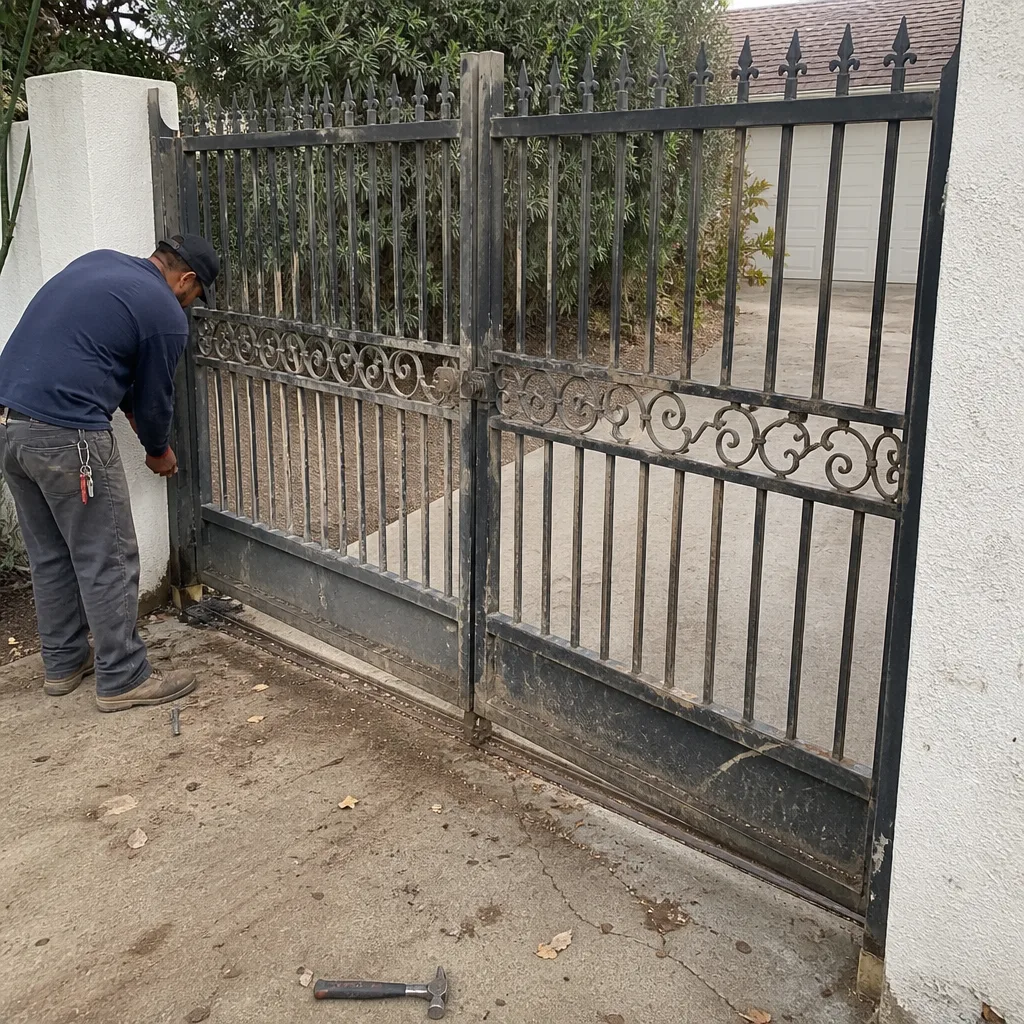 Before
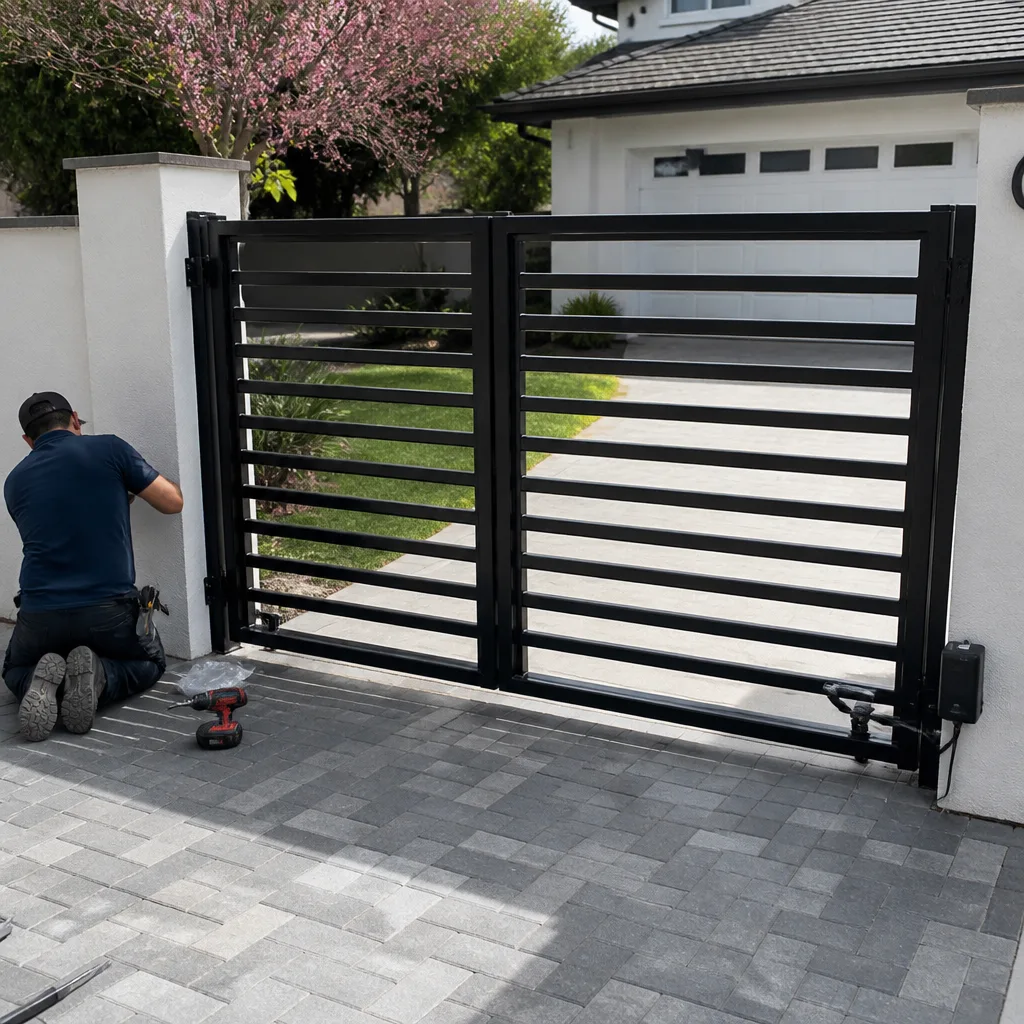 After
After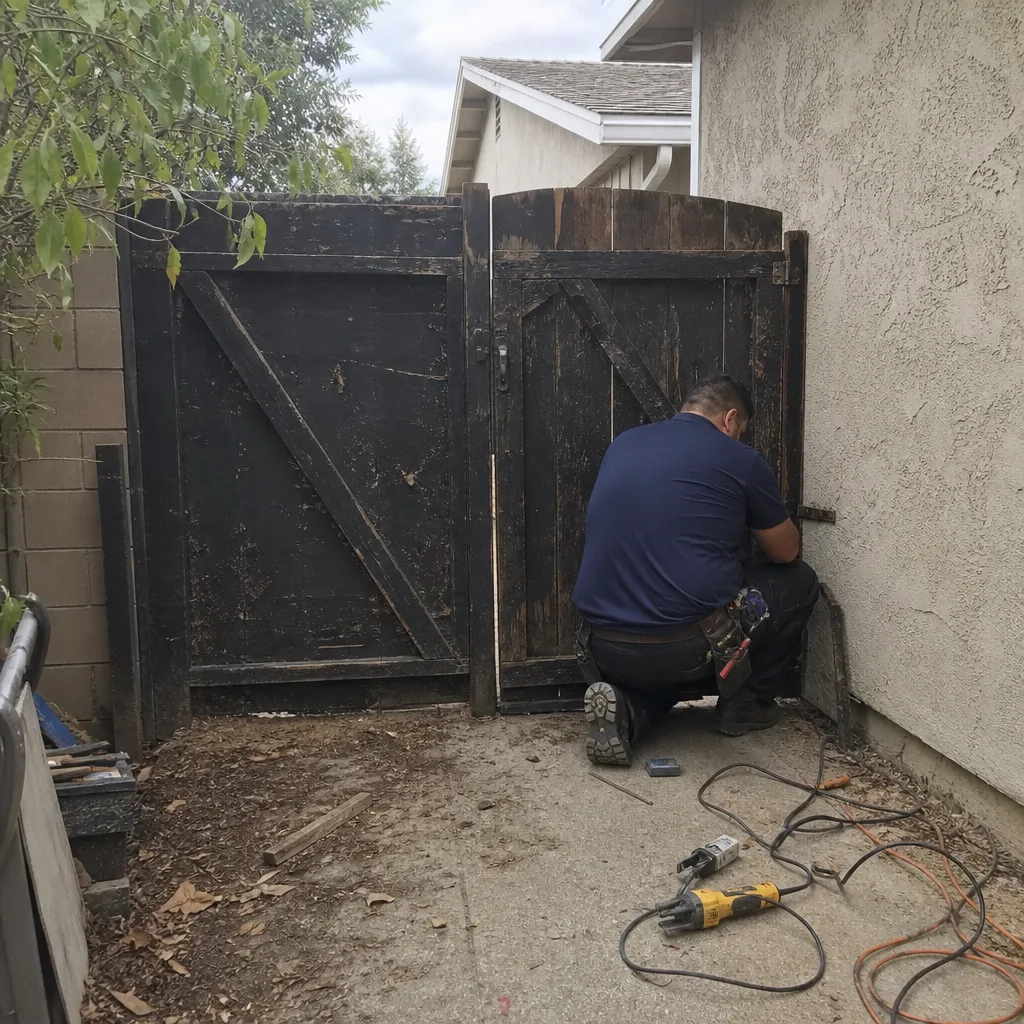 Before
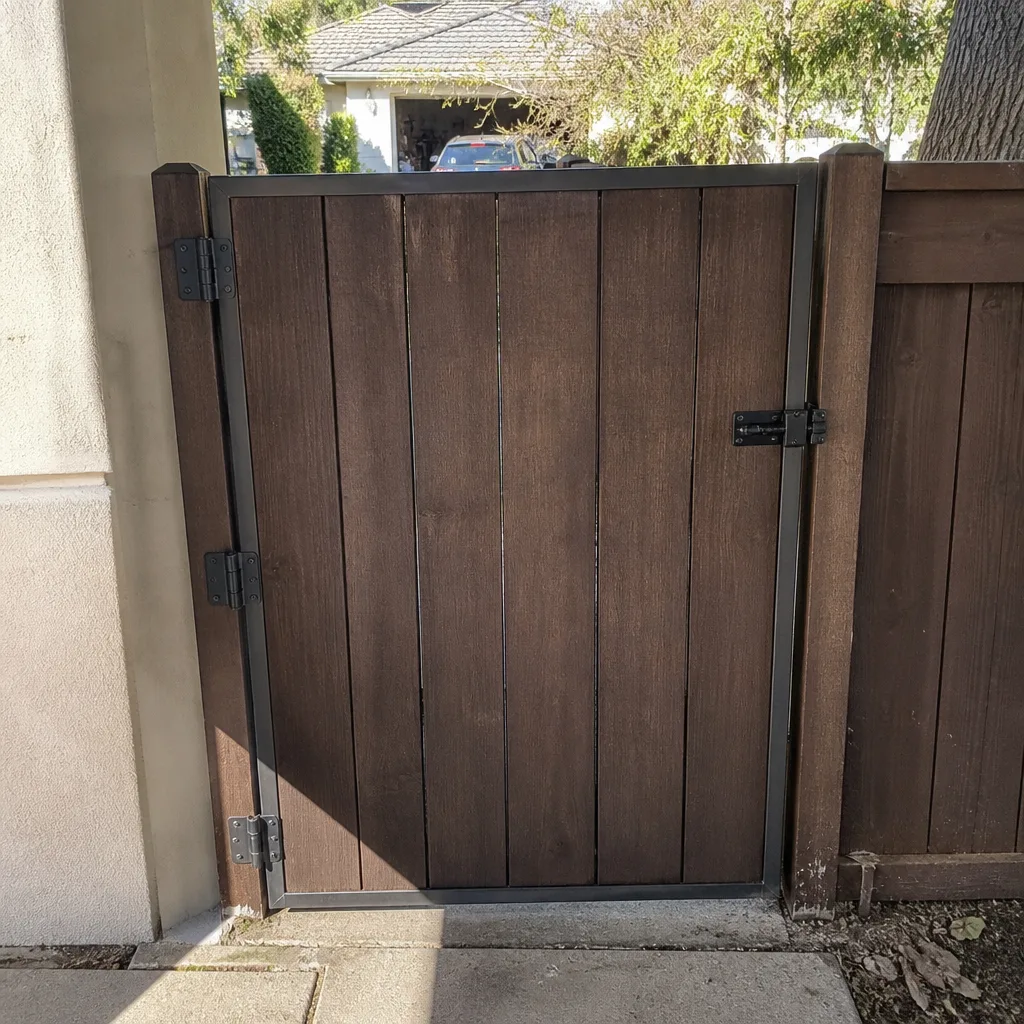 After
After