
Last updated October 16, 2026
 Wrought iron
 Wood & steel frame
 Farm & ranch
 Sliding driveway gates
 LiftMaster operators
Free on-site gate assessment - hinges, posts, and your LiftMaster or Nice gate operator checked before anything is quoted
The assessment is free and the quote is the invoice.
Get your free estimateGate Repair Permits, Codes & Inspections in CA: What You Need to Know
Most gate repairs in Thousand Oaks never cross a permit counter. They’re mechanical fixes: a spring, a hinge, a limit switch. But the moment a job touches structure or the motor that moves it, California code has an opinion. And that opinion is not widely understood by the homeowners it protects. This guide explains where the line is drawn under California Building Code and Ventura County enforcement, what UL 325 compliance actually requires, what happens during an insurance claim when unpermitted work is discovered, and how a homeowner pulls a permit when a contractor won’t. For related reading, see our Gate Repair Warning Signs: A Thousand Oaks Homeowner’s Reference Guide. You’ll leave with a working knowledge of gate permits in Thousand Oaks and enough specifics to evaluate any bid put in front of you.
Styles & brands we work with
Quick Answer
Gate repair in California generally does not require a permit when it’s limited to replacing existing mechanical parts in kind – springs, hinges, rollers, a failed circuit board. A permit is required for structural work (new posts, new footings, a gate added where none existed) and for automatic gate operator installations that involve new electrical circuits or are classified as alterations under the California Building Code. In Thousand Oaks, enforcement runs through Ventura County, which adopts California Building Code Section 1008 for pedestrian gate egress and requires UL 325 compliant operators on automatic gates.
Table of Contents
- Repair vs. Alteration: Where the Permit Line Actually Sits
- Thousand Oaks Permitting Under Ventura County Jurisdiction
- California Building Code Section 1008 and Pedestrian Gate Egress
- UL 325 Compliance: What It Requires and Why It Matters
- Insurance Claims and Unpermitted Gate Work: What Gets Uncovered
- Pulling a Permit Yourself in Ventura County: Step by Step
- Common Mistakes to Avoid
- When to Call a Professional
- Frequently Asked Questions
- The Bottom Line
Repair vs. Alteration: Where the Permit Line Actually Sits
The California Residential Code draws a practical distinction between maintenance and alteration. Maintenance keeps a gate doing what it was already doing. Alteration changes what it is, where it sits, or how it’s fed. That distinction, not the size of the invoice, is what triggers a permit.
Replacing a worn gate hinge with the same hinge on the same post is maintenance. Replacing a failed circuit board inside an existing LiftMaster operator is maintenance. Replacing a sagging gate leaf with a new leaf of the same size on the same hinges is, in most interpretations, maintenance. No permit. No inspection. The catch is that every one of those examples assumes the surrounding structure is sound.
Here is where work crosses into alteration in Thousand Oaks and across California:
- New posts or replacement of existing posts and footings. A post that has rotted at ground level or shifted out of plumb is structural. Digging it out, pouring a new footing, and setting a new post changes the structural load path. The County of Ventura treats this as an alteration requiring a building permit.
- Adding a gate where none existed. Cutting an opening in a wall or fence line and hanging a new gate is a minor construction project, not a repair. This needs a permit and, depending on the wall type, possibly a structural review.
- Widening an existing opening. Removing a section of wall to make room for a wider driveway gate changes the structural design of that wall and requires a permit.
- Replacing a manual gate with an automatic gate operator. The operator itself is an appliance, but its installation involves new electrical work and the gate system now falls under automatic gate safety provisions. This is an alteration.
- Upgrading a gate motor with a higher horsepower rating. If the new operator draws more current than the circuit was sized for, the electrical work needs review. We see this in Thousand Oaks when homeowners replace an older single-family swing operator with a heavier-duty FAAC or BFT model and discover the existing circuit is inadequate.
One test we’ve used on hundreds of Thousand Oaks driveways: if the work requires digging, pouring concrete, pulling new wire, or changing the physical dimensions of the gate opening, assume a permit is in play. If it’s a part-for-part swap, it isn’t. When in doubt, call the Ventura County Building and Safety Division and describe the job. A five-minute phone call settles the question before any dirt moves.
For a full picture of what Gate Repair in Thousand Oaks typically involves, including common repair scopes and their costs, see our dedicated service page.
Thousand Oaks Permitting Under Ventura County Jurisdiction
Thousand Oaks is a contract city for building and safety: the city contracts with Ventura County to administer its building permits and inspections. That means a gate project in the Lynn Ranch area or Newbury Park follows the same counter procedure as one in unincorporated county territory, but with Thousand Oaks planning requirements layered on top. The relevant authority is the Ventura County Building and Safety Division, with the Thousand Oaks Permit Center as the local intake point for planning-level review like setback and height checks.
What this means practically for a gate project:
- Seismic and wind exposure matter. Thousand Oaks sits in a high-wind corridor through the Conejo Valley, particularly in the northern neighborhoods against the foothills. Gate posts in these areas are engineered for lateral load, not just the weight of the leaf. The county’s review reflects that.
- Fence and gate height limits are zoning controls, not building code controls. Thousand Oaks regulates gate height through its municipal code, and the limit varies by zone. A gate that is structurally sound can still fail a permit review if it exceeds the height allowed in that district.
- Setback requirements on corner lots. Gates on corner lots must not block sight lines for vehicles pulling out. The county checks this during the permit review, not after the gate is built.
- Homeowner’s associations add a layer the county does not police. Thousand Oaks has widespread HOA governance, and most HOAs have their own gate design standards. County approval and HOA approval are separate and both are required. We’ve responded to jobs where a new gate was built to code and then forced into modification because the HOA never saw the drawings.
Working through a permit counter is not fast, and it shouldn’t be. For a straightforward post replacement, expect plan review to take two to four weeks in Ventura County, depending on current volume. Inspections are scheduled after that. The process rewards complete applications. Missing one detail on a plot plan pushes everything back.
Our team works on our Gate Repair services across Thousand Oaks from Lynn Ranch to Dos Vientos to Wildwood, and the permit questions are consistent: what was built before often wasn’t permitted, and the homeowner only discovers that when they try to modernize it.
California Building Code Section 1008 and Pedestrian Gate Egress
Section 1008 of the California Building Code covers means of egress doors and gates. For residential properties it matters in one specific, recurring situation: a pedestrian gate that serves as the exit from a property. The code requires that gate to open from the inside without a key, without special knowledge, and without more than a single motion where the gate is the designated egress path.
In Thousand Oaks, this comes up most often on properties where the driveway gate is the only practical pedestrian exit, or where a separate walk gate was walled over or blocked at some point. A locked pedestrian gate with a key-operated latch on the inside violates Section 1008. If a fire or medical emergency forces a family out the side of the house, a latch that requires a key from the inside is a code violation and a genuine safety failure.
The specifics:
- Exit side hardware must be operable without a key or tool. A thumb turn, a push bar, a panic-style latch: all compliant. A key cylinder on the inside: not compliant.
- The gate must swing in the direction of egress travel. A walk gate that swings into the path of someone exiting is not just annoying; it is a code issue under Chapter 10 when that gate is part of an egress route.
- Clear opening width minimums apply. For a required egress gate, the clear opening is typically 32 inches for residential applications. A narrow walk gate might not satisfy this if it is the only designated exit.
These provisions are sometimes referenced on a gate permit review and sometimes enforced only at final inspection. Either way, they are enforceable. The county inspector who signs off a permitted gate installation will look at the operator’s safety devices, but they will also look at the pedestrian gate hardware if a walk gate is part of the project.
When we replace an automatic operator on a Thousand Oaks property, we check the walk gate at the same time. It’s a one-minute check that catches a five-figure liability problem. A gate that fails Section 1008 and someone gets hurt means the homeowner’s insurance response is not going to be cooperative.
UL 325 Compliance: What It Requires and Why It Matters
UL 325 is the safety standard for automatic gate operators. It was written in response to a grim pattern: entrapment deaths and injuries from automatic gates that had no way to detect a person or a vehicle in the gate’s path and no way to reverse when they did. Every automatic gate operator sold in the United States must be listed to UL 325, and the installation must follow the standard’s installation requirements. A compliant operator installed incorrectly is still a compliance problem.
The standard requires:
- Entrapment protection devices. Every automatic gate must have a way to sense obstruction and reverse. That means photo eyes, edge sensors, or both, depending on the installation and the operator type. A Viking swing operator on a Thousand Oaks driveway needs matched entrapment protection that satisfies the standard for that specific model and application.
- Separate controls for open and close and a means to disconnect. The standard requires a manual release that works without tools so the gate can be opened by hand in an emergency or power failure.
- Warning signage placement. UL 325 installation instructions are explicit about where the warning placards go. This is not a suggestion; a missing placard is a real compliance finding, and it can be cited in a safety audit after an incident.
- Compatibility between operator and gate. Not every operator is rated for every gate weight and cycle rate. Installing a residential Linear operator on a heavy, high-cycle commercial gate is a violation of the listing and the standard. This is one of the most common misapplications we find when called to repair a gate that another contractor installed.
How to confirm a technician is installing a compliant system: ask for the operator’s UL 325 listing label and the model number, then ask to see the installation manual’s entrapment protection section. A technician who can’t produce those documents is not installing to the standard. It’s that simple. On our jobs, the operator model, the entrapment protection devices installed, and their compliance with UL 325 are written on the service record the homeowner receives.
For deeper detail on operator replacement work and the brands we service, including FAAC, BFT, and Linear systems, visit Gate Motor Repair in Thousand Oaks.
Insurance Claims and Unpermitted Gate Work: What Gets Uncovered
Here is the scenario that changes how homeowners think about permits. A delivery driver pulls up to a Thousand Oaks driveway. The automatic gate is closing. The photo eye is dirty or misaligned, or was never installed. The gate strikes the vehicle. The driver files a claim against the homeowner’s liability policy. The carrier’s adjuster asks for the gate’s installation records. If the motor was installed without a permit, the carrier now has a coverage defense.
Homeowner’s insurance policies typically exclude or limit coverage for damage arising from work performed without a required permit, particularly when that work is cited as the cause of the incident. The exclusion isn’t automatic; the carrier has to show the unpermitted work caused the damage. But in entrapment or strike cases, that’s usually exactly what the evidence shows. The gate that should have reversed didn’t, and the operator that should have been inspected wasn’t.
What this means in practical terms:
- The homeowner is the final responsible party. California law puts the duty on the property owner to ensure work on the property is properly permitted, or that the permit was never required in the first place. A contractor’s verbal assurance that “this doesn’t need a permit” carries no weight with a claims adjuster.
- Unpermitted work can reduce a claim payout or deny it outright. If a carrier determines the unpermitted installation caused or contributed to the incident, the homeowner may be left defending the claim personally.
- Disclosure obligations at sale. California requires sellers to disclose unpermitted work on a property. An automatic gate installed without required permits becomes a disclosure problem when the house is sold. Buyers will ask. Some will walk.
Protecting yourself when hiring is straightforward-see How to Hire a Gate Repair Contractor in Thousand Oaks: A Step-by-Step Guide for full details-but the short version is: require the contract to state who pulls the permit and when, get the permit number once it’s issued, and verify the final inspection is signed off. A contractor who cannot produce a permit number for work they claimed was permitted has already told you something.
We carry this concern into every Thousand Oaks gate installation we quote. If the job needs a permit, the permit is itemized in the written price. If the job is a repair that doesn’t need one, we say that clearly and include the reason. No ambiguity. That’s how a homeowner avoids becoming the test case in an adjuster’s file.
Pulling a Permit Yourself in Ventura County: Step by Step
California law allows a homeowner to pull a permit for work on their own primary residence as an owner-builder. That right exists even when a contractor does the physical work, though it changes the liability picture. If a contractor refuses to pull a permit and suggests you pull it yourself as owner-builder, that refusal is a warning sign. It usually means the contractor can’t pass a license check, isn’t insured for the work, or doesn’t want the county inspecting what they build.
Here is the process in Ventura County for a homeowner pulling a gate permit in Thousand Oaks:
- Confirm the permit type. Call the Ventura County Building and Safety Division or visit the Thousand Oaks Permit Center. Describe the work: new posts and footings, new gate, operator installation. They’ll tell you the permit type and the current fee schedule. Gate permits are typically classified as simple building permits unless structural review is required.
- Prepare the application package. You’ll need a site plan showing the gate location, property lines, and distance to the street; a basic construction detail for posts and footings; and the gate’s height and materials. If the job includes an operator, include the operator make, model, and horsepower. The more complete the submittal, the faster the review.
- Submit and pay the plan review fee. Expect the first review turnabout to be two to four weeks depending on the county’s volume. Corrections come back as written comments. Fix them and resubmit.
- Receive the permit and post it. The permit must be posted on the job site where it’s visible from the street. County inspectors look for it when they arrive.
- Schedule inspections. For gate work, this is typically a footing inspection before concrete and a final inspection after the gate and operator are installed. The final inspection checks the operator’s entrapment protection and the pedestrian gate hardware if Section 1008 applies.
- Pass final and keep the record. A signed final inspection card is the document that matters. File it with the house records. It’s the evidence your carrier and a future buyer will ask for.
One caveat specific to owner-builder permits: if you pull the permit as owner-builder and hire a contractor to do the work, you assume the construction liability that would otherwise fall on a licensed contractor under California law. That arrangement can work, but you should understand exactly what you’re assuming. It’s not a small thing.
If a contractor suggests owner-builder permitting because “it’ll be faster and cheaper,” ask yourself what else they’re willing to cut. Permitting speed is not the problem; inspection is not the enemy. Inspections are the proof the work was done right. For a full rundown of what a properly permitted Gate Installation in Thousand Oaks involves from quote to final inspection, that page walks through it in sequence.
Common Mistakes to Avoid
- Assuming “the contractor said no permit” is the end of the question. It’s the beginning. A contractor’s opinion does not shift the legal duty onto them. If the work needed a permit and one wasn’t pulled, the homeowner is the one left holding the liability. Confirm independently with Ventura County before work starts.
- Replacing an operator without checking the existing electrical circuit. A new FAAC or BFT swing operator with a higher draw on an undersized circuit trips breakers, burns connections, and can void the operator’s warranty. In Thousand Oaks, we see this most often on older homes where the original gate circuit was sized for a much smaller motor.
- Skipping UL 325 entrapment protection to save a few hundred dollars. Photo eyes and edge sensors are not optional accessories. They’re the difference between a gate that stops and a gate that doesn’t. An automatic gate without compliant entrapment protection is a known hazard and an insurance claim waiting.
- Installing a gate that blocks a required egress path. Locking a pedestrian gate with keyed hardware on the inside, or allowing a gate to swing against exit travel, violates Section 1008 where that gate is part of an egress route. The time to fix it is not after an emergency.
- Letting an HOA review slide because the county approved the permit. Thousand Oaks has dense HOA coverage, and HOA standards are separate from county code. A gate that passes county inspection can still trigger an HOA violation requiring modification.
- Allowing work to begin without a written price for the whole job. A verbal quote is a wish. A written price with the permit, materials, labor, and inspection line items listed is the only thing that protects you. This applies to permit work and to repairs that never see the permit counter.
- Filing an insurance claim for gate damage before checking the permit history. If the gate was installed without a required permit and that detail surfaces in the claim, the claimant has handed the carrier a reason to reduce or deny. Know the permit status before you file, and fix it first if it’s fixable.
When to Call a Professional
Call a professional when the gate post is leaning, when the operator is making a grinding noise it didn’t make last month, when the gate reverses at random or stops mid-travel, or when the pedestrian gate hardware requires a key from the inside. Call one when the operator is more than ten years old and the manufacturer no longer supports the control board. And call one when a permit question has come up that you can’t answer with a five-minute phone call to the county. Gate work looks simple right up until it isn’t. A post under tension, a spring under load, a high-draw motor on a weak circuit: these are not projects to learn on.
Carver Gate Repair Thousand Oaks offers free estimates in Thousand Oaks. The price is written, the repair is guaranteed for a full year, and the person who answers the phone is a live human being, not a voicemail box. Call (805) 309-3048 to schedule.
Frequently Asked Questions
No, for most mechanical repairs. Replacing hinges, springs, rollers, or a failed control board in kind does not require a permit. A permit is required when the work crosses into alteration: new posts, new footings, a new gate opening, or an operator installation with new electrical work.
Gate permits in Thousand Oaks through Ventura County typically cost between $150 and $600 depending on the scope, with simple post replacements at the lower end and projects requiring structural review at the higher end. The current fee schedule is available from the Ventura County Building and Safety Division. Call us at (805) 309-3048 and we’ll tell you precisely which permit applies to your project and what it should cost. You can also explore more guides & resources on our blog.
Yes, a homeowner can pull a permit as an owner-builder for work on their own primary residence. That right is in California law. But it transfers construction liability to the homeowner, and a contractor pressuring you to pull the permit instead of them is often revealing a licensing or insurance problem.
UL 325 is the safety standard that requires entrapment protection on every automatic gate operator, including photo eyes, edge sensors, manual release mechanisms, and warning signage. An operator installed without the listed entrapment protection is not compliant and creates a known safety hazard.
Yes, when the installation is permitted, the final inspection by Ventura County checks the operator’s safety devices, the pedestrian gate hardware where Section 1008 applies, and the structural elements of posts and footings. The signed final inspection card is the document you keep.
Possibly not. If a gate causes injury or damage and the carrier determines the gate or its operator was installed without a required permit, that unpermitted work can become a ground for reducing or denying the claim. The homeowner is the final responsible party, regardless of what the contractor said. Call us at (805) 309-3048 if you’re unsure whether your gate was permitted. We’ll assess it honestly and tell you what you’re looking at.
The Bottom Line
Gate permits in California are simpler than most homeowners fear, but the line between repair and alteration is easier to cross than most realize. A post replacement, a new gate opening, or an operator installation pulls a permit in Thousand Oaks. A spring swap does not. The enforceable standards that matter are California Building Code Section 1008 for pedestrian egress and UL 325 for automatic operator safety. Your insurance carrier will know both standards better than you do when a claim comes in. The way to protect yourself is a written price, a permit when the work calls for one, and an inspection record kept on file with the house. Carver Gate Repair Thousand Oaks has worked to that standard since 2008, and it’s the only way we quote a job. For a straight answer about your gate, call (805) 309-3048. The estimate is free, the price is written, and it doesn’t move at the door. Start with the Carver Gate Repair Thousand Oaks home page for an overview of how we work.
Written by Lonnie Burke, Owner at Carver Gate Repair Thousand Oaks, serving Thousand Oaks since 2008.
See the difference
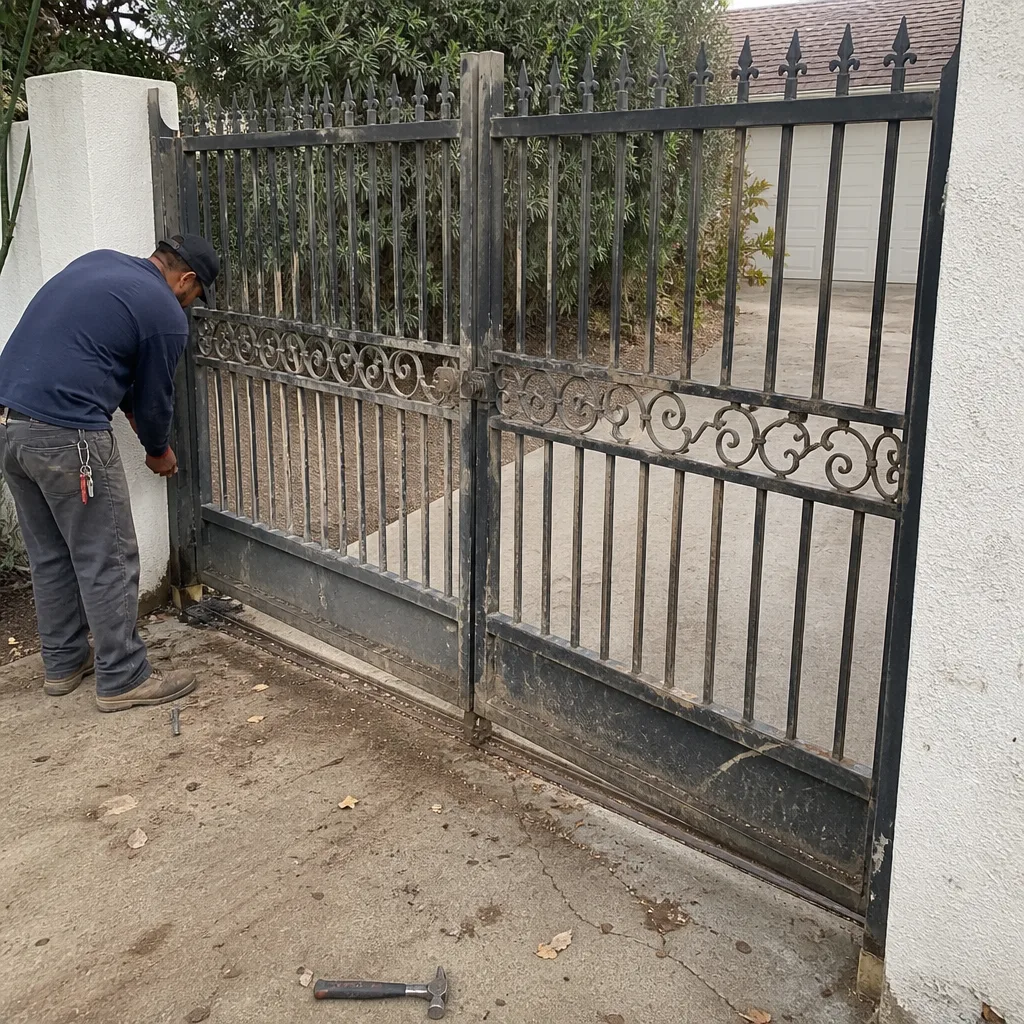 Before
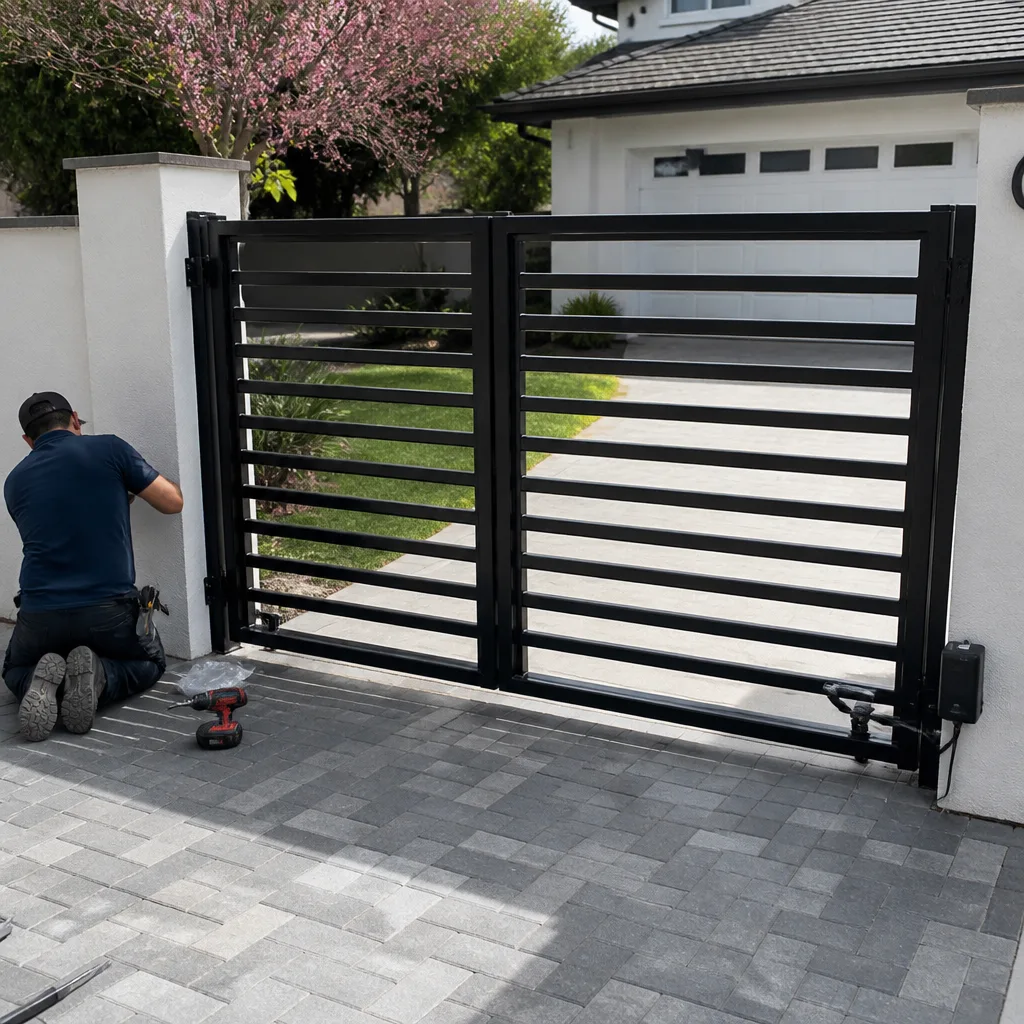 After
After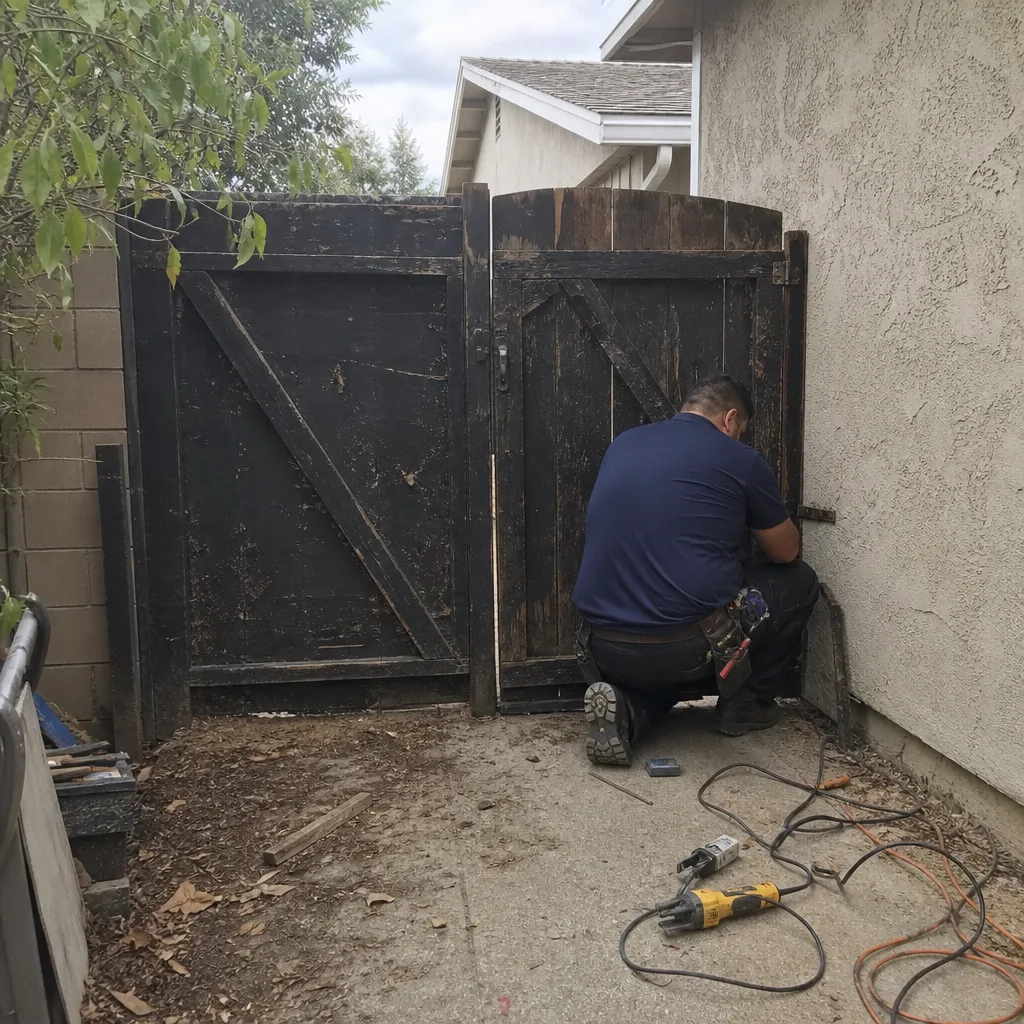 Before
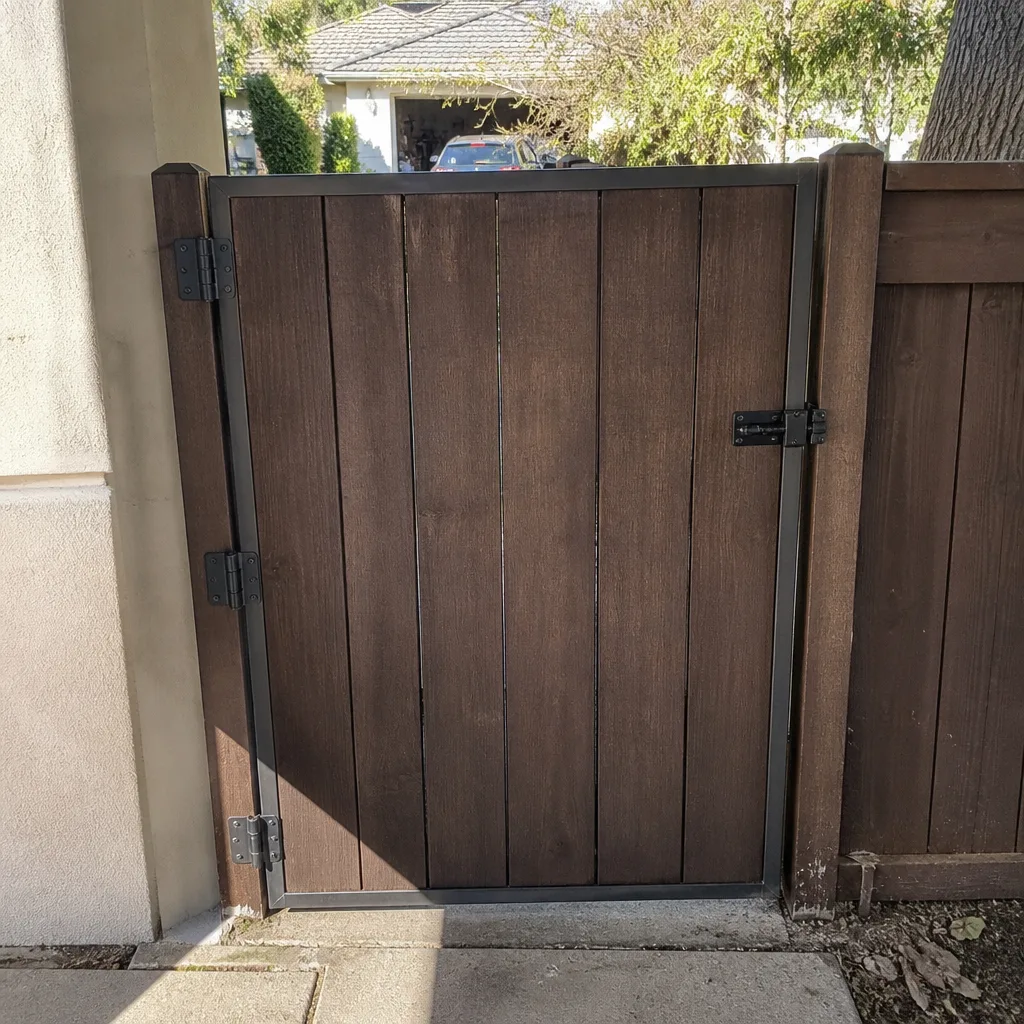 After
After