
Last updated October 16, 2026
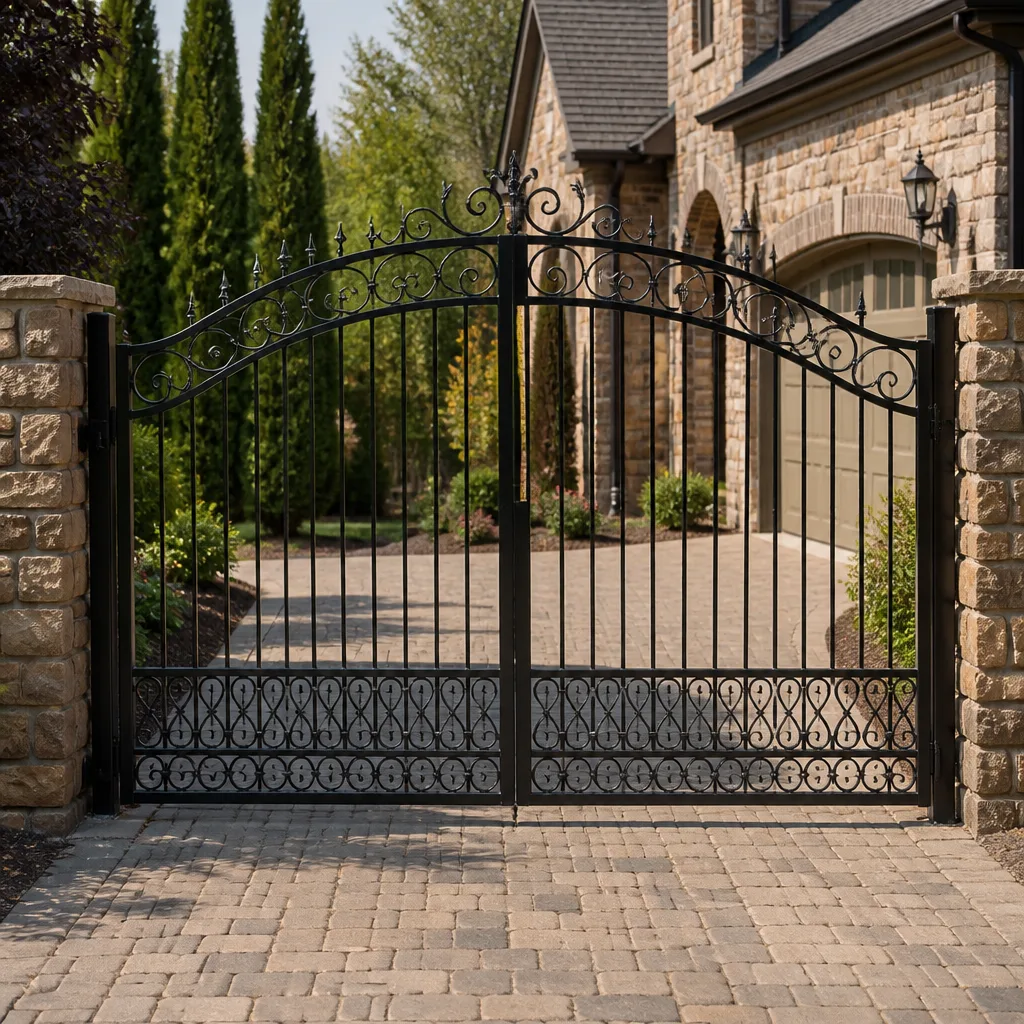 Wrought iron
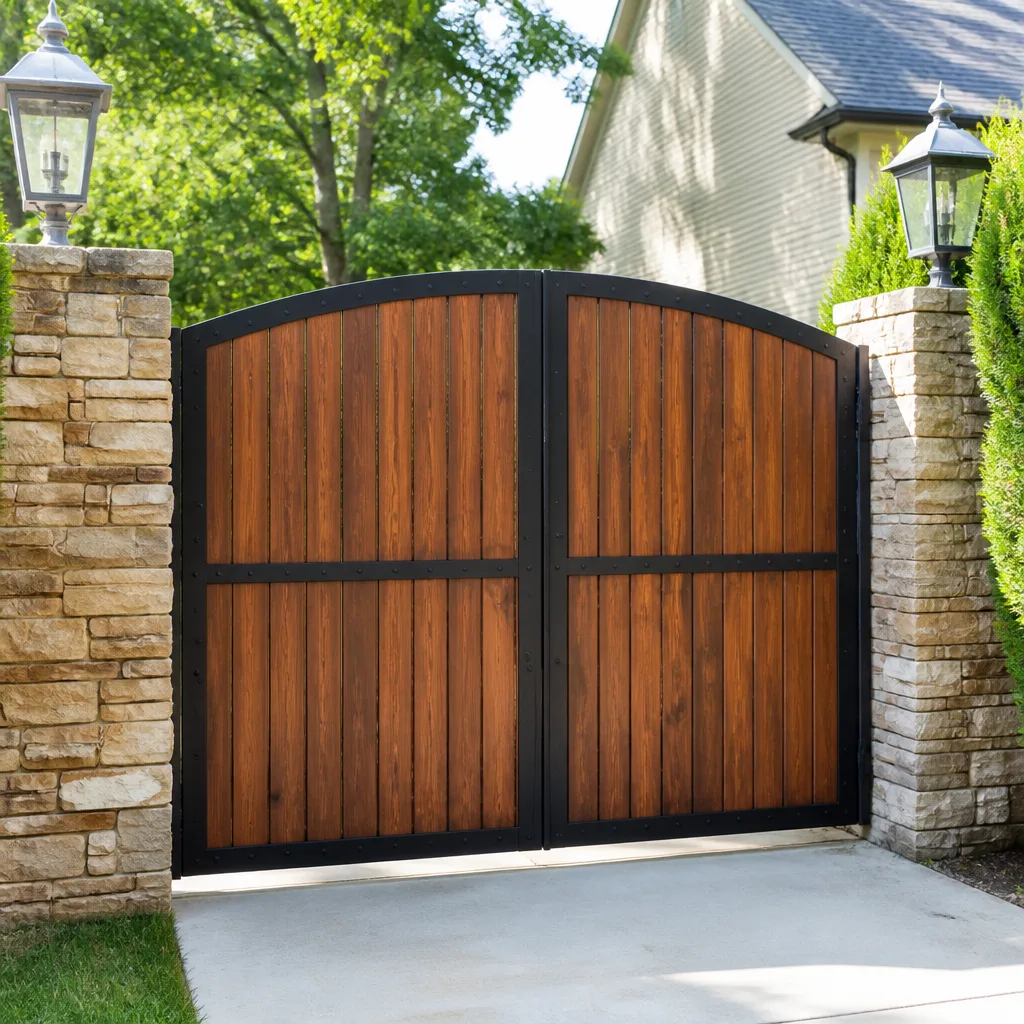 Wood & steel frame
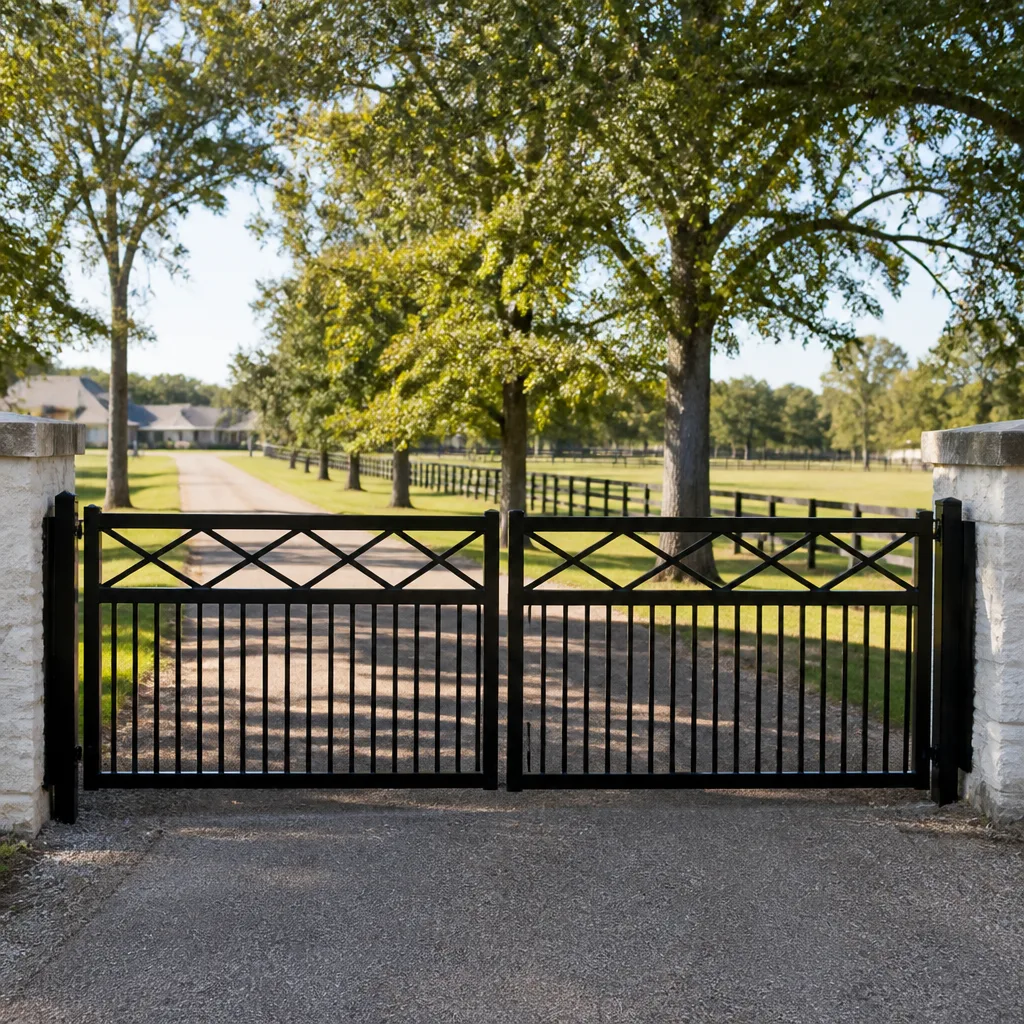 Farm & ranch
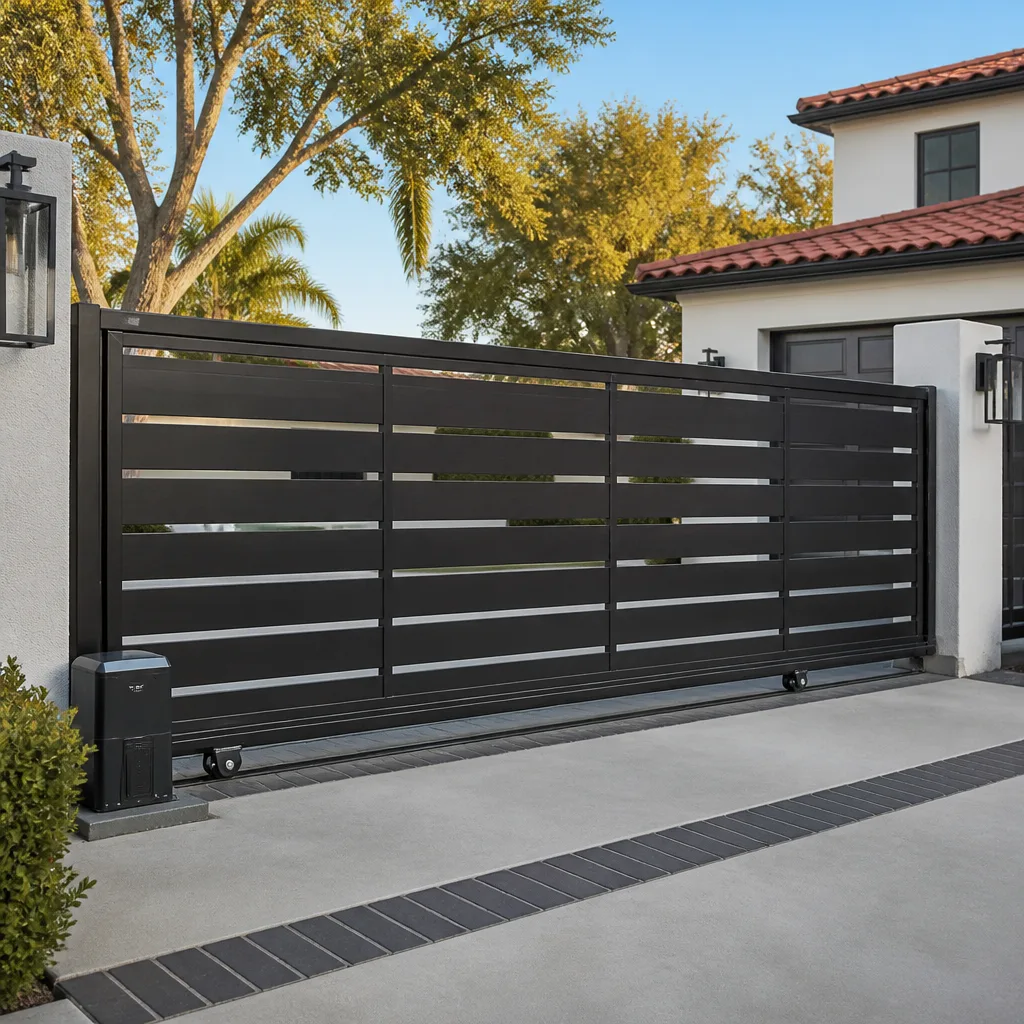 Sliding driveway gates
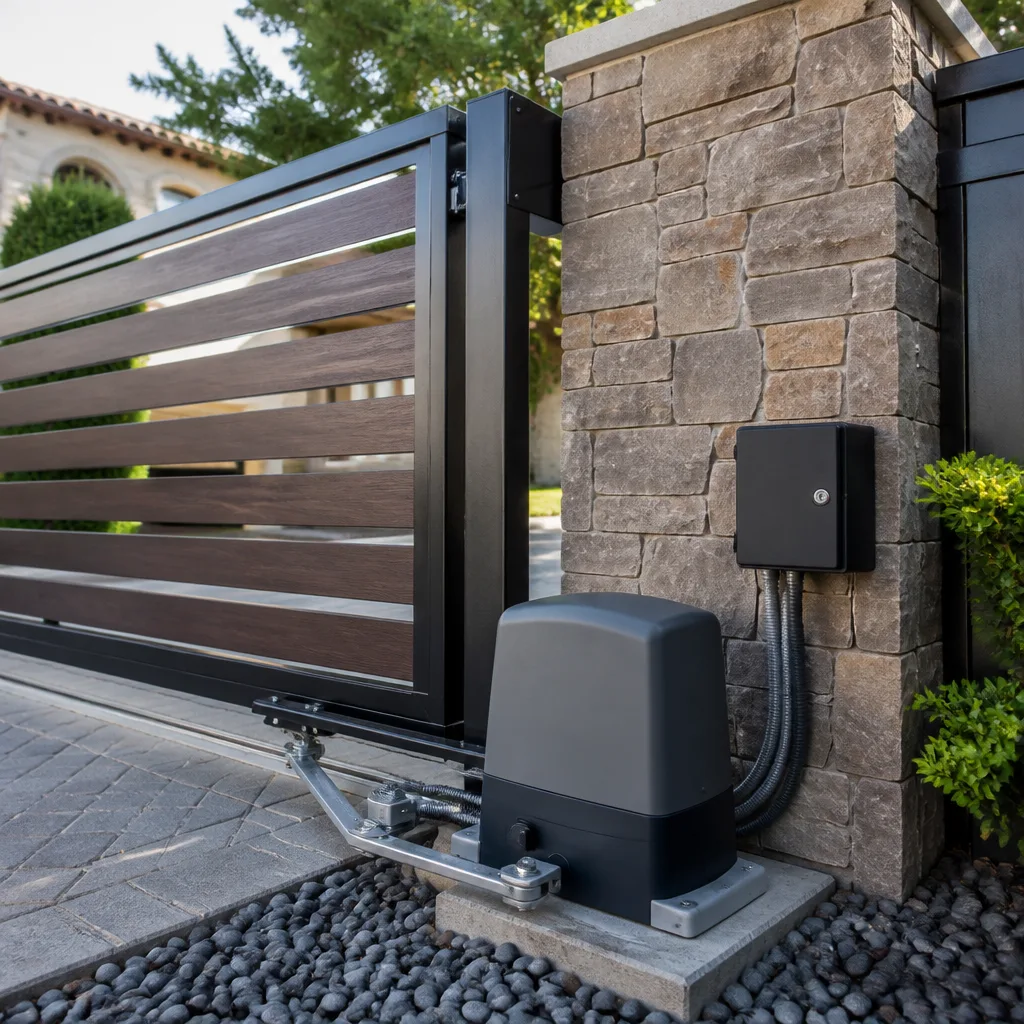 LiftMaster operators
Free on-site gate assessment - hinges, posts, and your LiftMaster or Nice gate operator checked before anything is quoted
The assessment is free and the quote is the invoice.
Get your free estimateGate Repair Warning Signs: A Thousand Oaks Homeowner’s Reference Guide
A gate that hesitates for two seconds before moving isn’t “just slow.” That hesitation pattern, especially on cold Thousand Oaks mornings, is a textbook capacitor degradation symptom. Left alone, it becomes a failed motor board and a $900 repair instead of a $180 one. This guide translates the specific sounds, behaviors, and physical changes your gate shows into their probable mechanical causes, so you know which signs justify watching and waiting versus which justify picking up the phone today. You’ll learn how to distinguish motor problems from control board problems from structural problems, because each requires a different repair approach, and misdiagnosis is where homeowners in Thousand Oaks lose money.
Quick Answer
The most common gate repair warning signs in Thousand Oaks are: grinding or clicking sounds during operation, a gate that hesitates before moving or moves slower than normal, a gate that reverses direction unexpectedly, visible sagging or a widening gap at the hinge side, and a motor that hums but doesn’t move the gate. Any one of these symptoms means a component is already failing. What changes is the repair cost, which climbs sharply the longer the symptom is ignored. Homeowners who call at the first sign of change typically pay between $150 and $400, while those who wait until the gate stops entirely often face $700 to $1,400 motor or board replacements.
Styles & brands we work with
Table of Contents
- Warning Signs You Can Hear: Grinding, Clicking, and Humming
- Warning Signs in Behavior: Hesitation, Reversal, and Inconsistent Cycles
- Physical Warning Signs: Sagging, Gaps, and Rust Streaks
- Motor Failure vs. Control Board Failure: How to Tell the Difference
- Brand-Specific Warning Signs: Linear, Viking, Ghost Controls, DoorKing
- Safety-Critical Warning Signs: When to Stop Using the Gate Immediately
- How to Document Warning Signs Before You Call a Technician
- What Gate Repair Warning Signs Typically Cost to Fix in Thousand Oaks
- Common Mistakes to Avoid
- When to Call a Professional
Warning Signs You Can Hear: Grinding, Clicking, and Humming
Sound is the earliest and most reliable warning system a gate has. Every gate makes some noise in normal operation, a low mechanical whir from the motor and the soft rattle of wheels on track. When that baseline changes, the gate is telling you something specific. The three sounds we hear most often in Thousand Oaks are grinding, rapid clicking, and a low hum with no movement. Each points to a different failure point, and treating them as interchangeable is a common homeowner mistake.
Grinding during gate travel almost always means metal-on-metal contact where there shouldn’t be any. On sliding gates, the most common cause is a worn V-wheel or a track that has shifted out of alignment after years of Thousand Oaks clay soil expanding and contracting with the seasons. On swing gates, grinding typically comes from the hinge bearings, which dry out and begin to gall. The sound may be intermittent at first, present only in certain parts of the travel arc. That’s the window to act. A hinge bearing replacement is under $200 in most cases. A hinge post that wears through from prolonged grinding becomes a structural repair, often $600 or more.
Clicking is different from grinding, and the pattern matters. A single click when you press the remote followed by nothing is usually a relay on the control board, and it means the board is receiving the signal but not sending power to the motor. Rapid clicking during operation, several clicks per second, points to a failing capacitor or a limit switch that is arcing. The limit switch tells the motor where to stop, and when it fails, the gate may over-travel and slam into the physical stop. We see this most often on older systems in the Lynn Ranch and Newbury Park areas where gates have been through 15 or 20 years of daily cycles. Clicking is never normal, and it doesn’t resolve itself.
Humming without movement is the most urgent sound on this list. A motor that hums but doesn’t turn the gate is either seized mechanically or starved electrically. The most common cause is a failed start capacitor, the component that gives the motor its initial torque. The capacitor degrades over time, and the first symptom is exactly what the opening paragraph described: a hesitation on cold mornings. The second symptom is the hum. A capacitor replacement is a straightforward repair, typically $150 to $250 including parts and labor. If the humming persists and no one addresses it, the motor windings overheat and the motor itself burns out, which is a $600 to $900 replacement. The sound is the same, but the cost difference is substantial.
Thousand Oaks sits in a climate where morning temperatures routinely drop into the 40s during winter months, and those cold-soak conditions accelerate capacitor degradation. It’s not your imagination that the gate is slower in January. That’s physics, and it’s also a diagnostic clue worth mentioning when you call a technician.
Warning Signs in Behavior: Hesitation, Reversal, and Inconsistent Cycles
Behavioral warning signs are the ones homeowners notice second, after sounds. They’re also the ones most often dismissed as quirks. A gate that “sometimes” doesn’t respond to the remote, a gate that reverses direction when it’s halfway open, a gate that moves noticeably slower than it did six months ago. None of these are personality traits. Each is a symptom with a mechanical cause.
Hesitation before movement is the signature of a weakening capacitor, as covered above, but it can also indicate a motor board that’s losing its ability to read the limit switch inputs. The distinction matters because the repairs are different. A capacitor replacement is under $250. A motor board replacement typically runs $350 to $600, and on some brands, the board must be programmed to match the specific operator, which is not a plug-and-play job.
Intermittent operation, where the gate works fine for three days and then doesn’t respond for an afternoon, is usually one of three things: a failing receiver board, a loose wire connection, or a transformer that’s overheating. In Thousand Oaks, we also see intermittent operation after heavy Santa Ana wind events, when dust gets driven into the control box and coats the circuit board. The dust creates micro-shorts between traces. The fix is often a simple cleaning and re-torquing of connections, which is why it’s worth having the gate looked at before replacing parts. A technician who opens the box and starts swapping components without checking connections is guessing, and guessing is expensive.
Direction reversal is different from intermittent operation and more serious. A gate that starts to open and then reverses back to the closed position is reporting a resistance problem. On an automatic gate, the motor is equipped with an obstruction sensor. When the gate meets resistance above a threshold, the motor reverses. The intended function is safety: if something is in the gate’s path, the gate shouldn’t crush it. But when the reversal happens with no obstruction present, the gate is telling you that its own mechanism is generating resistance. The cause is usually a physical problem: a wheel binding in the track, a hinge that’s seized, a rack that’s worn enough that the drive sprocket is skipping. The motor reversal is a symptom, not the disease. Fixing the resistance fixes the reversal.
Slow cycle time deserves its own category. A sliding gate that took 12 seconds to open when it was installed and now takes 18 seconds is working harder. The most common causes in Thousand Oaks are partially seized rollers, a motor that’s losing torque, or a drive chain that’s stretched and slipping. Each of these is a progressive condition. The gate doesn’t suddenly get slow one afternoon. It degrades over months, and the incremental change is easy to miss when you see the gate every day. We recommend homeowners make a mental note of how long the gate takes to open when everything is working normally, then time it again if they suspect a problem. That single number, a cycle time in seconds, is one of the most useful data points a technician can receive.
One more behavioral sign that’s specific to swing gates: a gate that drifts closed or open after stopping, not holding its position. This happens on sloping driveways or when the operator’s internal brake is failing. In the hillside neighborhoods of Thousand Oaks, like Sunset Hills or parts of the Conejo Grade area, driveways frequently slope, and a swing gate that won’t hold position is a genuine safety issue. The gate becomes a hazard to vehicles and people. The fix is usually an operator repair or replacement, and it’s one of the cases where we tell homeowners to stop using the gate and call for service. For a deeper look at motor-specific failures on swing and slide systems, our Gate Motor Repair in Thousand Oaks page covers operator diagnostics in detail.
Physical Warning Signs: Sagging, Gaps, and Rust Streaks
Physical signs are the easiest to spot and, paradoxically, the most ignored. A gate that sags or drags is visible every time you pull into the driveway. A widening gap at the hinge side is measurable. Rust streaks are right there on the face of the gate. Yet these signs get normalized because they develop slowly. The body of the gate is the structural foundation everything else depends on, and when it degrades, the motor and controls are forced to compensate. Structural problems are also the ones that turn a $200 repair into a $2,000 replacement when left unaddressed for years.
Sagging on a swing gate comes from one of three sources: the hinge post leaning under the weight, the hinges themselves wearing, or the gate frame losing rigidity. On an ornamental iron gate in Thousand Oaks, which may weigh anywhere from 400 to 900 pounds, a leaning hinge post is serious. The post was set in concrete, and a lean means the concrete footing is failing or the post has begun to fatigue at the base. This is not a repair that gets done with shims and good intentions. The post typically needs to be re-set or replaced. Hinge wear, by contrast, is a manageable repair, especially when caught early. A gate that scrapes the ground at the latch side closing stroke is telling you the hinges have worn enough to change the gate’s geometry. New hinges and a re-alignment usually cost $300 to $500.
A widening gap at the hinge side of a closed gate is easier to spot if you know to look. When the gate is closed, the gap between the gate post and the gate itself should be consistent from top to bottom and should be roughly equal to the gap on the latch side. If the hinge-side gap is visibly wider at the top than the bottom, the gate has dropped. If the gap changes noticeably from month to month, the drop is progressive. This is also the sign to watch on new gates. A gate that drops within the first year of installation tells you the post was undersized or the concrete was under-cured. Our Gate Installation in Thousand Oaks page goes into what proper post-setting looks like, so you know what to expect from a new gate.
Rust streaks are the most specifically Thousand Oaks warning sign on this list, because coastal fog and morning marine layer push moisture into the Conejo Valley from the south. Iron gates rust. That’s not a defect. But rust streaks that run from a joint or weld are worth investigating, because they indicate water has found a path inside the frame. A gate that was sealed and painted at installation may show small rust bloom at the welds after several years of fog cycles. That’s cosmetic and treatable with sanding and re-painting. Rust streaks that originate at a hinge or at the attachment point for the operator arm are structural. That’s where load concentrates, and rust there means the steel is thinning. A rust streak at a load-bearing point is a call-today sign, not a sand-and-paint sign.
For sliding gates, the equivalent physical warning is a track that’s visibly out of level or a gate that wobbles as it travels. A properly hung sliding gate should track straight and true. Wobble means the V-wheels are worn or the track has settled. In the clay-rich soil of Thousand Oaks, track settling happens over time, and the repair is a re-level of the track, which is one of the more common sliding gate services we perform. The Gate Repair in Thousand Oaks page has more on the full scope of slide gate maintenance and repair.
Motor Failure vs. Control Board Failure: How to Tell the Difference
When a gate stops working, homeowners understandably want to know one thing: what’s broken, and what does it cost. The question underneath that question is whether the problem is in the motor or the control board, because those are the two most expensive components in the system. They fail differently, and learning the difference can save you from paying for a motor replacement when the board was the culprit, or the reverse.
The motor is the mechanical component that physically moves the gate. It contains windings, a capacitor for starting torque, and a gearbox. The control board is the brain. It receives the signal from your remote, interprets the limit switch inputs, manages the obstruction sensor, and sends power to the motor. A motor fails mechanically, and the signs are physical: humming without movement, a burning smell, a gate that moves but with obvious loss of power. A board fails electrically or through component degradation, and the signs are behavioral: no response to the remote, a gate that opens but won’t close, a gate that closes but won’t re-open, or a gate that operates on a delay.
Here’s the diagnostic sequence we use, simplified for a homeowner’s ear:
- Press the remote and listen. If you hear the motor hum or strain, the board is sending power, and the problem is in the motor, the capacitor, or the physical gate mechanism. If you hear nothing at all, the board may be at fault, or the power supply to the board is interrupted.
- Try the wall-mounted opener or keypad, if you have one. If the gate responds to the keypad but not the remote, the board is fine and the remote transmitter or receiver is the problem. If the gate responds to neither, the board or the power supply is suspect.
- Check the display on the control board, if accessible. Many modern boards have an LED readout that displays a diagnostic code. That code is the fastest path to an accurate diagnosis, and it’s worth photographing before you call a technician.
- Look at the behavior when the gate does move. A gate that moves at full speed for one cycle and then stalls suggests a thermal issue in the motor. A gate that moves at the wrong time, or moves when it shouldn’t, suggests a board that’s misreading sensor inputs.
It’s also worth knowing that motor and board failures are often connected. A board that fails because of a power surge may take the motor’s start capacitor with it. A motor that jams and overdraws current can fry the output relay on the board. This is why bundling the components into a single guess is dangerous. A qualified technician tests each component in sequence before replacing anything. We never install a new motor on a gate with a damaged board, and we don’t hand a homeowner a new board while a seized wheel is still binding the track. That’s the difference between a repair and a recurring repair.
Brand-Specific Warning Signs: Linear, Viking, Ghost Controls, DoorKing
Each gate operator brand has its own engineering approach, and that means each brand fails in its own characteristic ways. Knowing what your system is and what its common failure modes look like can focus a phone call dramatically. Carver Gate Repair works on nine major gate motor brands, and four of them are particularly common in the Thousand Oaks area: Linear, Viking, Ghost Controls, and DoorKing. A full list of our service scope is on the Carver Gate Repair Thousand Oaks home page.
Linear operators, including the popular LS and LSO series on residential sliding gates, tend to present their failures through limit switch problems first. The limit switch is what tells the gate where to stop at full open and full close. On a Linear system, a failing limit switch shows up as a gate that over-travels by a few inches, or a gate that won’t reach the closed position and stops with a visible gap. Another Linear hallmark is relay chatter, a rapid clicking from the board when the remote is pressed but no movement follows. Linear boards are known for their longevity, so a clicking board on a Linear system often points to a capacitor or external wiring issue rather than a board replacement.
Viking operators are built for heavier gates, and their characteristic failure mode is gearbox-related. Viking uses a worm gear system that’s durable under load but sensitive to lubrication loss. The warning sign is a grinding sound that’s present at the start of the cycle and then smooths out as the gate travels. That initial grind is the sound of a gear engaging with insufficient lubrication. Viking systems also tend to show their age through transformer hum, a low electrical buzz that’s present even when the gate is idle. A transformer that hums louder over time is approaching failure, and it’s a much less expensive fix before it fails than after.
Ghost Controls is a newer brand, and its systems are widely installed on residential gates in the Conejo Valley because of their direct-drive design and quiet operation. Ghost Controls failure modes are mostly electronic rather than mechanical. The most common warning sign we see is inconsistent remote range, which points to a receiver module that’s losing sensitivity. Another Ghost Controls signature is the “phantom activation,” where the gate opens or closes without anyone pressing a remote. That’s caused by radio interference or a failing receiver board, and it should be addressed immediately because an activated gate that no one intended is a safety problem. Ghost Controls boards are integrated units in many models, so a board-level problem often means replacing the entire operator head rather than a sub-component.
DoorKing is the workhorse of commercial operators but is also installed on many high-end residential gates in Thousand Oaks, particularly in the gated communities of Westlake and North Ranch. DoorKing systems are highly modular, which means component-level repair is often possible. The characteristic DoorKing warning sign is a display code on the control board’s LED screen. DoorKing boards report specific error codes for things like “obstruction detected” or “limit switch fault,” and those codes are the fastest diagnostic path in the industry. A board that displays a persistent code even after the condition is cleared is telling you the board itself has a failing memory chip or logic issue. DoorKing also has a known weakness in its early-model loop detector integration, and if your gate doesn’t respond to a loop detector that used to work fine, that’s a board input problem.
Give your technician the brand name when you call. It changes who gets sent and what parts go on the truck.
Safety-Critical Warning Signs: When to Stop Using the Gate Immediately
Most gate warning signs are about cost and inconvenience. A few are about safety, and those need to be treated differently. Under California law, automated gates are required to have functioning safety systems, including obstruction sensors and, on certain installations, photocells. A gate that reverses unexpectedly, a gate whose photocells are misaligned, or a gate that won’t hold position on a slope represents a genuine risk of injury or property damage.
A gate that reverses direction unexpectedly is the most serious warning sign on this list. On the surface, a gate that opens when you pressed close, or closes when you pressed open, looks like an inconvenience. Functionally, it’s a gate that has lost its understanding of its own position and is operating on false sensor input. That’s the condition under which an automated gate can close on a vehicle or a person. The cause is usually a failed limit switch, a worn obstruction sensor, or a board that’s misinterpreting inputs. The fix is not something to schedule for next week. This is a stop-using-the-gate-and-call situation.
Misaligned photocells are common and commonly ignored. Photocells are the small paired sensors mounted on the gate posts near ground level, one sending an infrared beam and the other receiving it. When the beam is broken, the gate’s safety system interprets it as “something is in the path” and refuses to close or reverses. When the photocells are out of alignment, the beam never reliably connects, and the gate behaves erratically. A homeowner who doesn’t know what the photocells do may simply note that “the gate acts weird” and continue using it in manual mode. The problem with manual mode is that it disables the safety systems. A gate run in manual mode has no obstruction detection. That’s how accidents happen. Photocell alignment is a quick and inexpensive fix.
A gate that won’t hold position on a slope is the third safety-critical sign. On a swing gate, the operator is supposed to hold the gate in position at the end of travel. When the operator’s internal brake fails, the gate drifts, and on a slope that drift becomes a gate swinging under its own weight. An 800-pound iron gate swinging freely is a loaded battering ram. This is common in the hillside neighborhoods of Thousand Oaks, and we’ve seen the damage an unrestrained gate can do. If your gate drifts after stopping, the gate is unsafe to use until the operator is repaired or replaced.
If you see any of these signs, treat them as an emergency. Do not attempt to prop the gate open with a rock or tie it with a rope. A gate that’s propped open is a security hole and a mechanical liability. Call a professional. At Carver Gate Repair, our Gate Repair in Thousand Oaks service dispatches on safety calls with the understanding that a moving gate that’s misbehaving is a different category of problem than a gate that’s simply stuck.
How to Document Warning Signs Before You Call a Technician
The single best thing a homeowner can do to save time and money on gate repair is to arrive at the diagnostic phone call with good information. A technician who hears “it makes a noise sometimes” is walking onto a job blind. A technician who hears “it grinds for the first three seconds of travel, only in the middle third of the track, and it’s been doing it for about two weeks” can bring the right parts on the first trip. The difference in trip count is the difference between a $200 repair and a $400 repair.
Here’s a simple documentation routine we recommend to every homeowner in Thousand Oaks:
- Write down the exact symptom, not your interpretation. “Grinding sound when gate starts moving, lasts about three seconds, only when opening, not when closing” is a report. “The gate is dying” is not.
- Note the time of day and weather conditions. Morning vs. afternoon matters because temperature affects capacitors and motors. A gate that fails only on cold mornings is a different repair than a gate that fails randomly.
- Record the cycle time. Time the gate from fully closed to fully open with a phone stopwatch. Write that number down. Then time it again a few days later. A consistent number is diagnostic gold.
- Photograph the gate from both sides, close up on the hinges and track. The photo doesn’t need to be artistic. It needs to show the condition of the hardware. If there’s a visible crack, rust streak, or gap, get a close shot.
- If there’s a control box, photograph the board and any LED display. Many boards show a diagnostic code. Even if you don’t know what the code means, the photo gives the technician the information without a second visit.
- Write down the operator brand and model number. The brand name is usually on the operator cover or the control board. The model number is on a sticker inside the box or on the motor housing. If you have the original installation paperwork, even better.
When you call, phrase the first sentence as: “I have a [brand] gate operator, and the symptom is [describe exactly what you observed].” That one sentence frames the whole call productively. It tells the dispatcher what kind of gate you have, what the problem appears to be, and what parts might be needed. Everything after that is confirmation.
What Gate Repair Warning Signs Typically Cost to Fix in Thousand Oaks
Here’s a straight answer, because the question “how much will this cost” deserves a straight answer. These are the price ranges we quote for common repairs in the Thousand Oaks area. The ranges account for variations in equipment age, accessibility, and specific brand part costs. Every repair we do at Carver Gate Repair begins with a written price, quoted and agreed before any work starts. The number doesn’t move after the job is opened.
| Warning Sign | Typical Cause | Typical Repair Cost Range |
|---|---|---|
| Hesitation before movement, worse in cold weather | Failing capacitor | $150 – $250 |
| Grinding during travel | Worn V-wheel or dry hinge | $150 – $300 |
| Clicking with no movement | Failed relay or control board fault | $200 – $500 |
| Humming without movement | Failed capacitor or seized motor | $200 – $900 depending on whether motor replacement is required |
| Intermittent operation | Loose connection or receiver failure | $125 – $350 |
| Gate reverses with no obstruction | Sticking roller, worn rack, or misaligned track | $200 – $450 |
| Sagging swing gate | Worn hinges or leaning post | $300 – $600 for hinges; $700 – $1,500 if post needs re-setting |
| Rust streaks at welds | Water ingress, cosmetic | $150 – $350 for sand and re-paint |
| Rust streaks at hinges or operator mount | Structural weakening | $500 – $1,200 depending on extent |
| Gate won’t hold position on slope | Failed operator brake | $400 – $800 for operator repair or replacement |
These ranges are specific to the Conejo Valley market. If you’ve been quoted significantly more than the top of these ranges, ask for an itemized breakdown. A written price should list the parts and the labor separately. If a technician won’t put the number in writing before starting work, that’s a signal to call a different company. The Gate Repair in Thousand Oaks page has our full pricing approach and what’s included in every service call.
Common Mistakes to Avoid
- Ignoring a changing sound because the gate still works. The gate will keep working until the day it doesn’t. A $200 hinge repair today is a $600 post repair in a year. The gate is not going to heal itself.
- Spraying the track or hinges with WD-40. WD-40 is a water displacer, not a lubricant for gate mechanisms. It strips the heavier grease that the hinges and drive systems need, and it attracts dust. Use a proper lithium grease or, better, let a technician lubricate with the right product for the specific machine.
- Replacing the remote batteries when the gate is clearly the problem. If the gate doesn’t respond to the remote, the keypad, and the wall switch, the batteries are not the issue. Swapping batteries is cheap and harmless, but spending two weeks cycling through batteries delays the actual diagnosis.
- Propping a gate open that won’t close properly. A propped-open gate disables the safety systems, invites rust through improper loading, and tells the neighborhood the gate is broken. It’s also the single fastest way to cause a second failure while you’re still ignoring the first one.
- Calling a generalist handyman for a motor board problem. Gate automation is a specialty trade. A handyman who can fix a fence cannot diagnose a DoorKing board error code, and the attempt often costs more than the original repair. If the problem is in the motor, the board, or the operator, call a gate specialist.
- Requesting a quote over the phone without describing the symptom. A phone estimate without a symptom description is a made-up number. A real quote requires seeing the equipment and understanding the failure mode. That’s why we give written prices after a site assessment, not before.
When to Call a Professional
Call a professional when the warning sign is progressive, meaning it’s getting worse by the week or by the month. Call when the gate makes a sound it didn’t make before. Call when the behavior changes in any way you can describe. Call when the gate is on a slope and won’t hold position. Call when the gate reverses without an obstruction. Call when the rust is at the hinges, not the face. And call when you’ve read this guide and recognized your own gate in the warning signs, because you now know more about what you’re looking at than you did ten minutes ago. You’re not imagining it.
Carver Gate Repair Thousand Oaks offers free estimates in Thousand Oaks. Call (805) 309-3048 and describe what you’re seeing. A live person answers, not a voicemail box, and we’ll tell you honestly whether the symptom you’re describing needs a service call or can wait.
See the difference
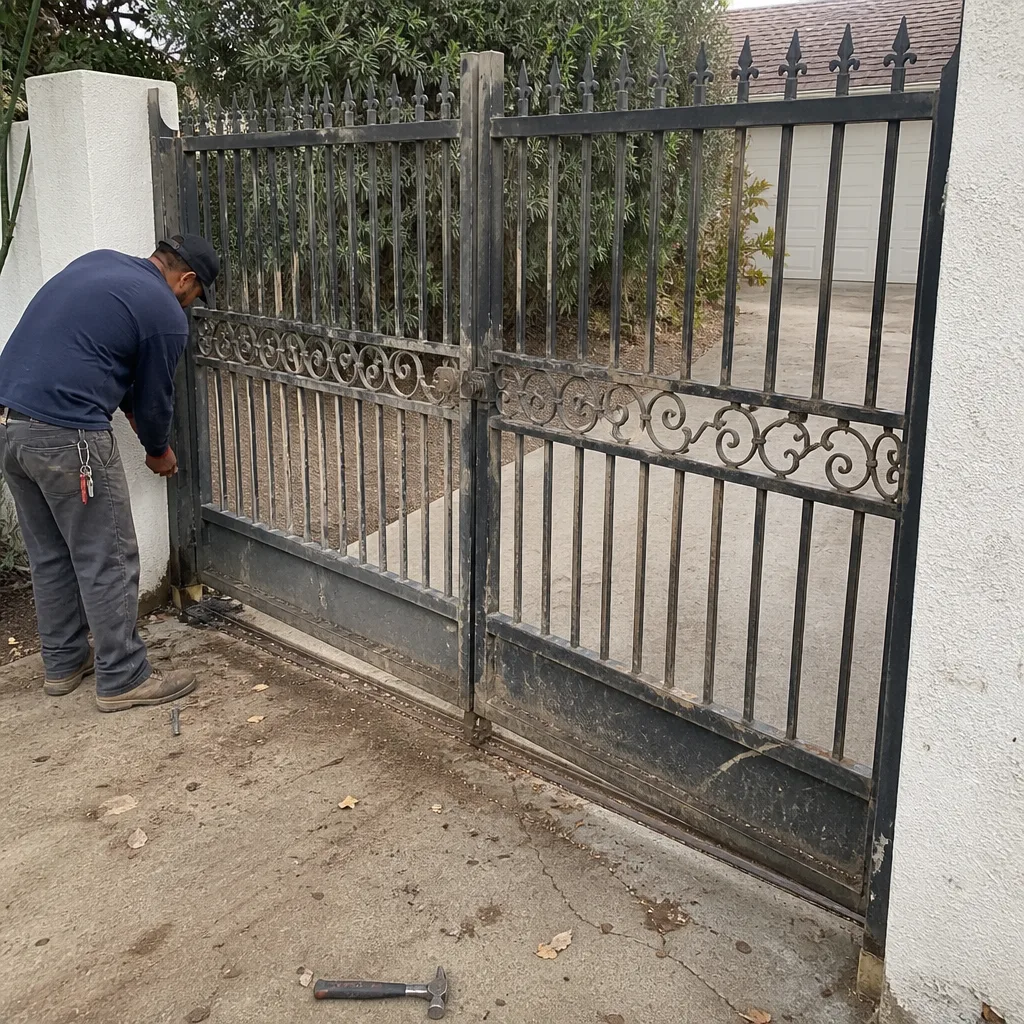 Before
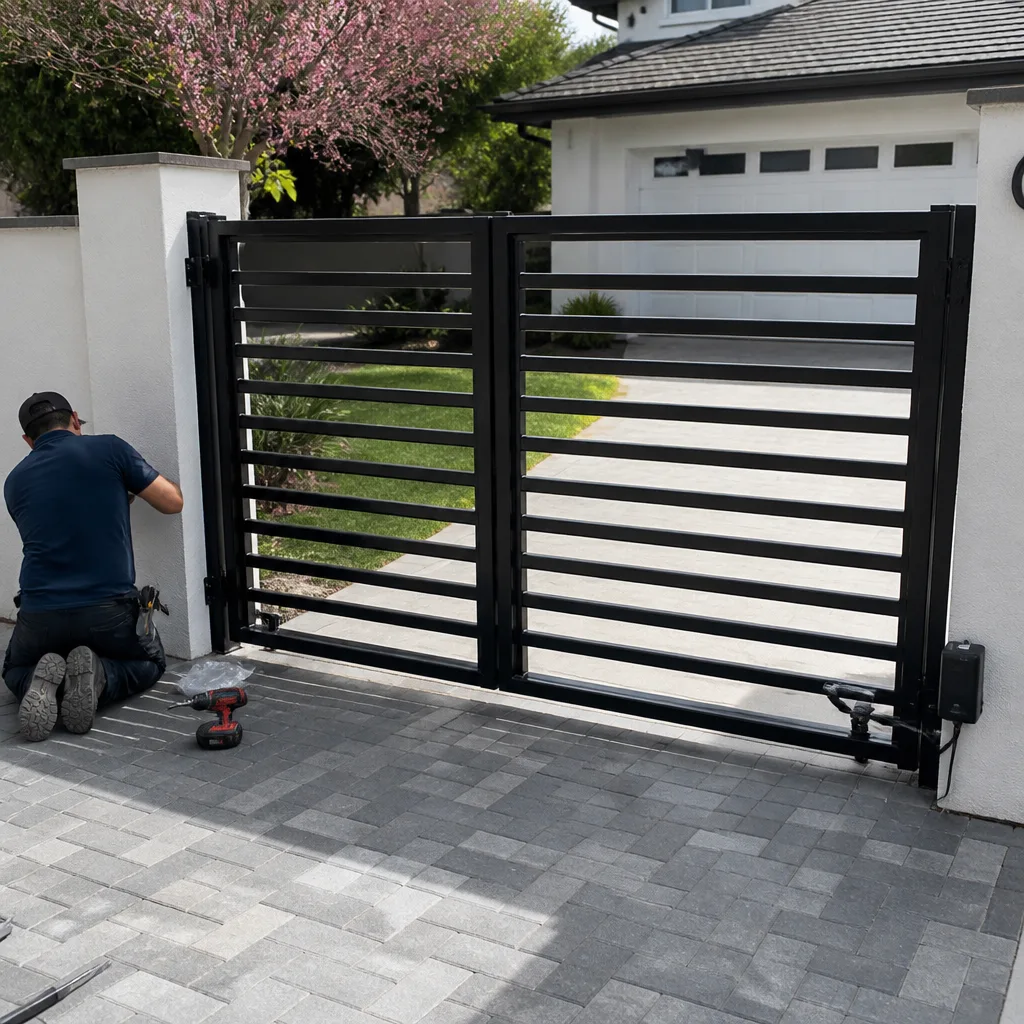 After
After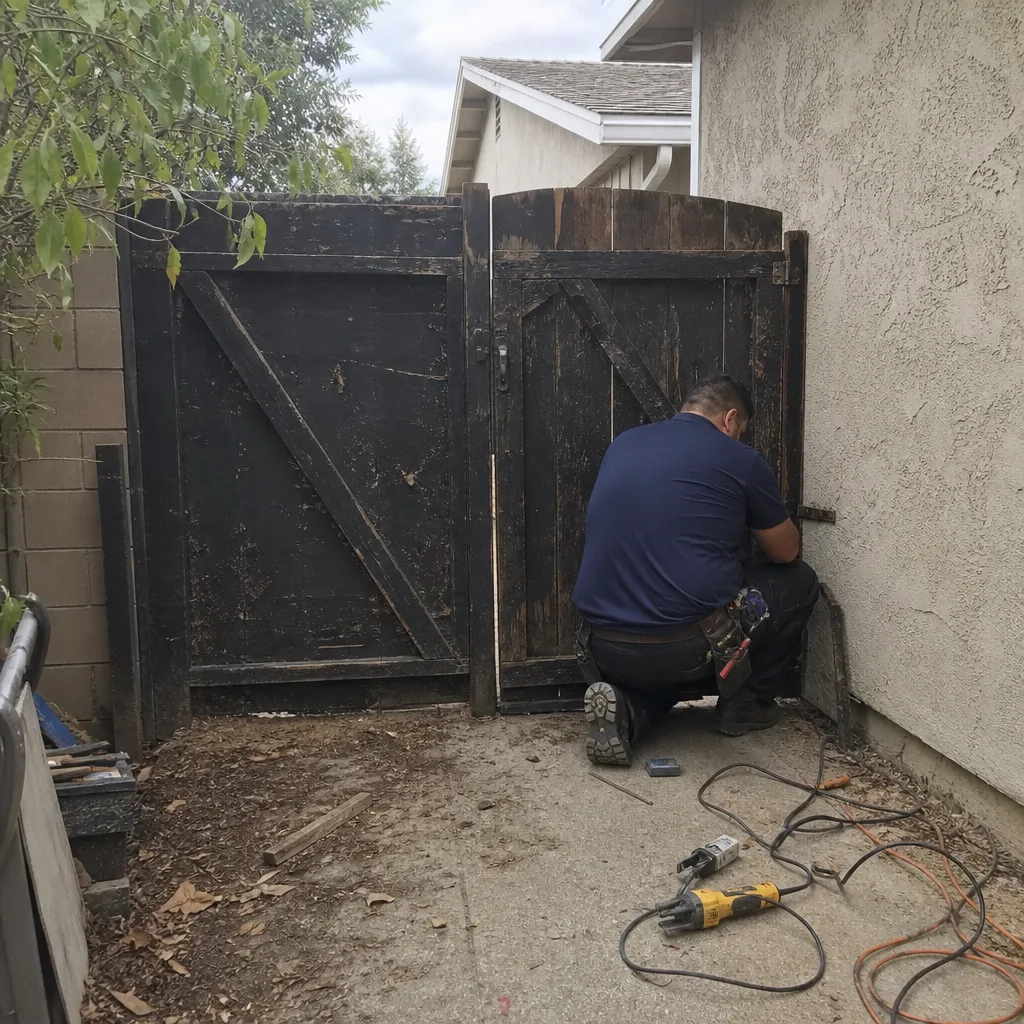 Before
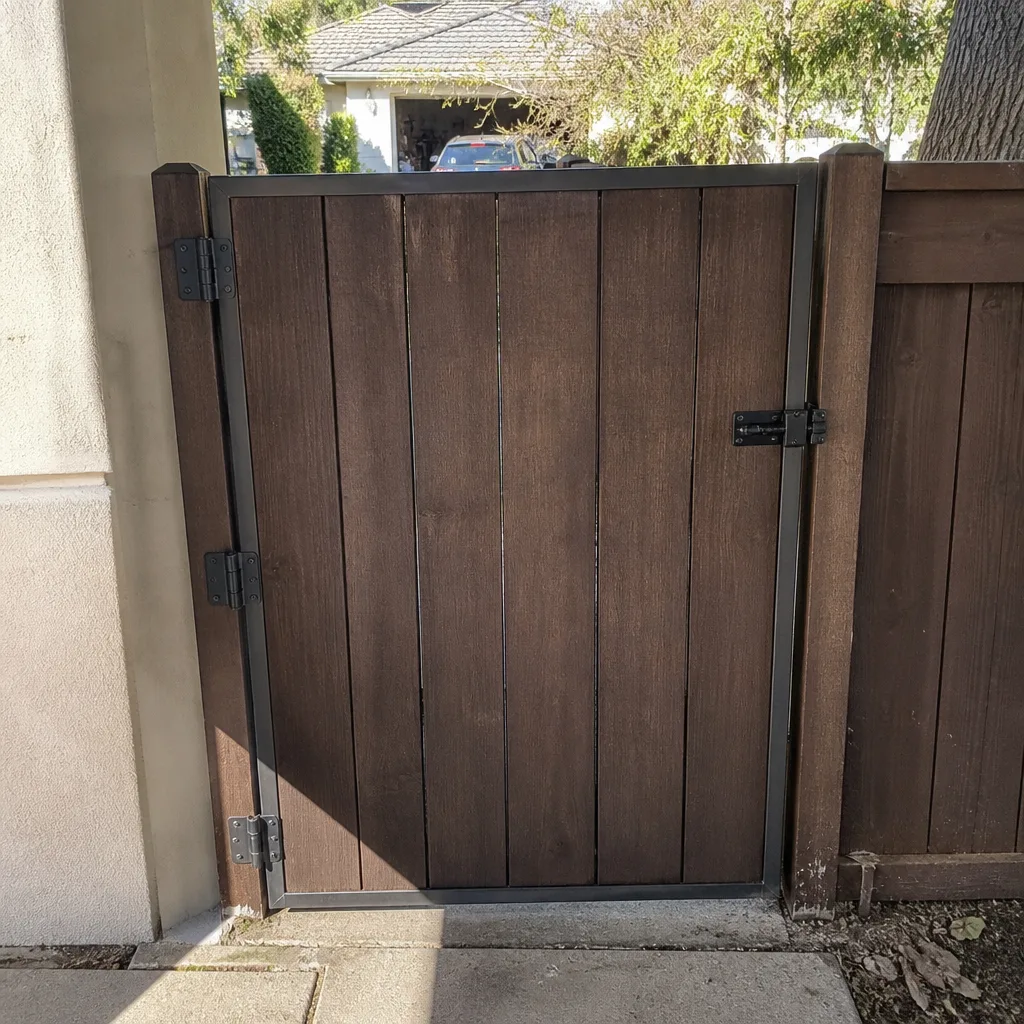 After
AfterFrequently Asked Questions
The most common gate repair problem in Thousand Oaks is a failing capacitor, which shows up as hesitation before the gate moves, worse in cold weather. Capacitors degrade naturally over five to eight years, and Thousand Oaks winter mornings accelerate the failure cycle. Repair costs typically run $150 to $250. Call (805) 309-3048 for an exact quote, and the estimate is free.
Yes. Carver Gate Repair dispatches technicians for same-day service calls in Thousand Oaks, particularly for safety-critical issues like a gate that reverses unexpectedly or won’t hold position. Standard repairs that aren’t safety emergencies may schedule within one to two business days. Call (805) 309-3048 and tell us what the gate is doing, and we’ll give you a straight answer on timing.
A gate motor replacement in Thousand Oaks typically costs $600 to $1,400, depending on the operator brand, the weight and size of the gate, and whether the motor can be replaced independently of the control board. Viking and DoorKing motors run at the higher end of that range. We quote a written price before any work starts. For more details on operator replacement, see our Gate Motor Repair in Thousand Oaks page, or call (805) 309-3048.
We handle both. Carver Gate Repair Thousand Oaks does gate repair, gate installation, and gate motor repair across the Conejo Valley. New installations run through a measured quote process with a free on-site assessment. Our Gate Installation in Thousand Oaks page covers the full scope, including what sizing and permitting considerations apply in Thousand Oaks.
Every repair we perform carries a written guarantee, good for a full year from the date of service. If the repair fails inside that window, the second visit is free. No charge, no argument. The guarantee is in writing on every repair, and it’s what we call the 365-Day Done Right Promise.
In most cases, repairing a gate is worth it. The frame and the tracks are made of steel or iron, and they outlast the electrical components by decades. The parts that fail, motors, boards, capacitors, and hinges, are all replaceable. Replacement makes sense when the gate frame itself is rotting, when the hinge post has failed structurally, or when the gate was undersized for its opening from the start. A good technician will tell you which case you’re in, not try to sell you whichever option is more profitable. Call (805) 309-3048 and we’ll assess it straight.
The Bottom Line
Gates don’t fail suddenly. They fail slowly, and they broadcast the failure through sounds, behaviors, and physical changes a homeowner can see if someone has taught them what to look for. That’s what this guide is for. A grinding sound is a hinge or a wheel telling you it’s wearing out. A hesitation on a cold morning is a capacitor telling you it’s dying. A gate that reverses or won’t hold position is a safety system telling you it’s failing. The repair that costs $150 today will cost $900 next year, not because the parts got more expensive, but because the failure cascaded. Learn the signs, document what you see, make the call. Lonnie Burke and the team at Carver Gate Repair Thousand Oaks answer the phone around the clock, and we’ll give you a written price before any work starts.
Written by Lonnie Burke, Owner at Carver Gate Repair Thousand Oaks, serving Thousand Oaks since 2008.